Recently in Probation Category

The 80 Hour (EtG) Alcohol Test. Reliable or Unreliable?

March 30, 2012,

etg test.jpg

What is EtG?

Ethyl Glucuronide (EtG) is a metabolite of beverage alcohol (ethanol), which means that it is used by the body to break down alcohol in the system. According to the drugtestingnetwork.com, the presence of EtG is a conclusive sign of recent alcohol consumption.

What is an EtG Test?

The EtG test, which can be implemented by a Court for a variety of reasons, is able to detect alcohol in a person's system when a standard breathalyzer is not sufficient. Ethyl Glucuronide is detectable for up to 80 hours after an individual stops drinking, but can vary depending upon the person's metabolism and the amount of alcohol that was consumed.

The EtG Testing Process (provided by uatests.com, a testing facility)
EtG testing is a process similar to other lab-based drugs of abuse testing. The following steps are typically followed:
Step 1: A chain of custody form is completed
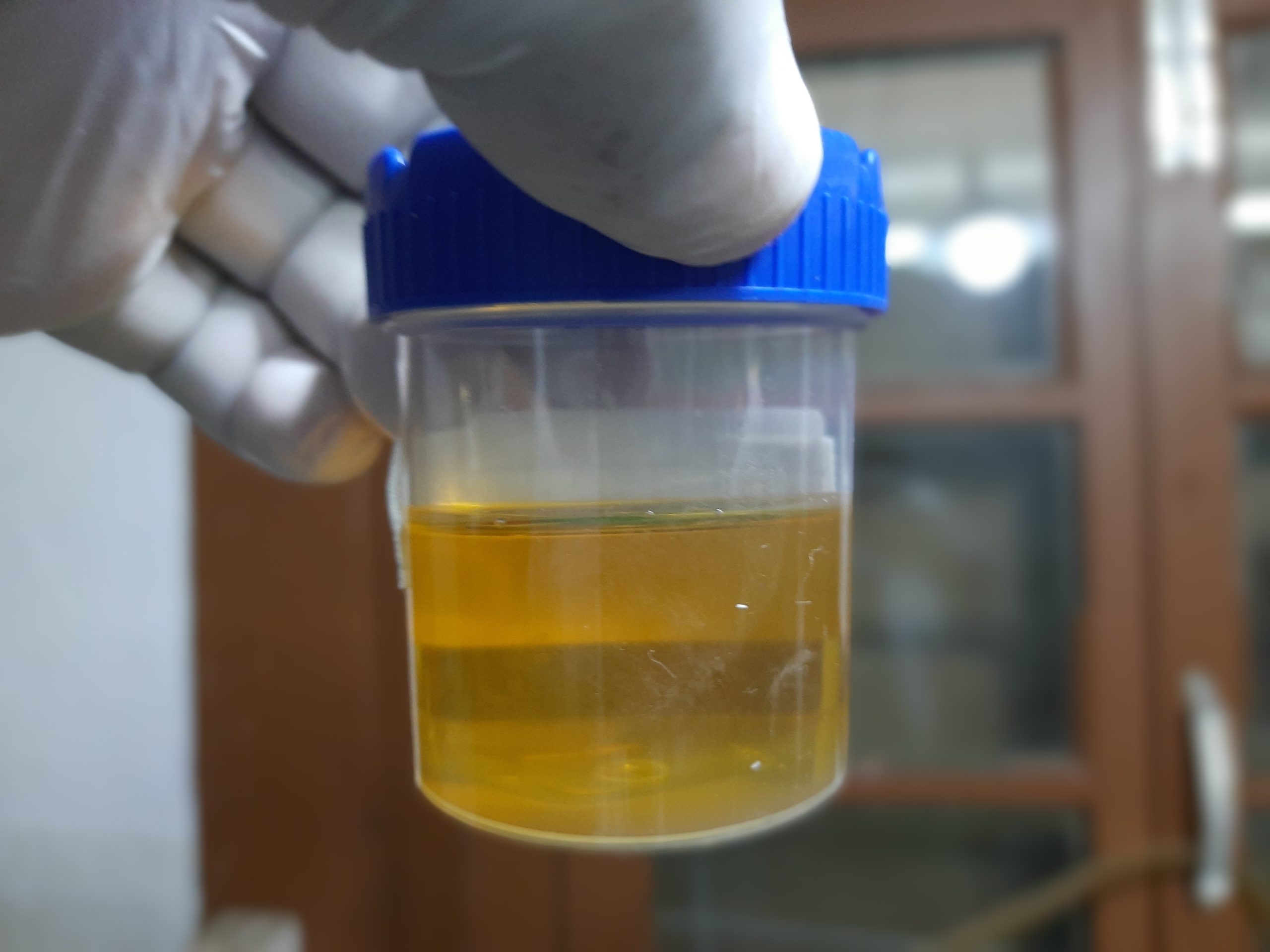
Step 2: The subject voids into a standard collection cup. The temperature of the urine is checked, using a temperature strip on the collection cup, to assure it is a valid sample.
Step 3: A urine specimen syringe device is used to collect a sample of the urine.
Step 4: The syringe device, and related paperwork are sent to the lab. This is easier, cleaner and less expensive than sending a bottle of urine.
Step 5: The test samples are shipped to the lab. The most economical and effective method of getting your sample to the lab will depend on your location.
Step 6: Results are typically reported within three days of receipt at the lab.

Why is the EtG test ordered?

Individuals on probation for a criminal offense are sometimes subjected to random alcohol testing, which dictates that they blow into a portable breathalyzer. This test will only show the alcohol (ethyl alcohol) which remains in the bloodstream and is expelled as vapor from the lungs. Therefore, this test will only give information on whether or not the individual has drank alcohol within hours of taking the test.

Under certain circumstances the Court will order an EtG test for someone who is prohibited by law from consuming alcohol, based on an alcohol-related offense (usually drunk driving). The test is also used to screen for drinking problems, intervention evaluation, employment purposes and to motivate changes in drinking behavior.

Is the EtG Test reliable?

According to the Substance Abuse and Mental Health Service Administration, the EtG test is inaccurate and may actually be unreliable. The SAMHSA discusses the test's sensitivity to even small amounts of alcohol that can be present in daily-use items. Examples include hand sanitizer, hair spray, laundry detergent, aftershave and even some cosmetic items. The information provided in the SAMHSA advisory notice led the U.S. Department of Health to deem the test "experimental". The EtG test can produce positive results when an individual is simply exposed to any number of products which contain ethanol.

Despite EtG testing's scientific unreliability, the test continues to be widely-used across the country. For this reason, our law firm is against the use of EtG tests.


Continue reading "The 80 Hour (EtG) Alcohol Test. Reliable or Unreliable?" »

Tired Explanations Part 1: Cough Syrup, Second Hand Marijuana Smoke, and Other Excuses That Don't Hold Up In Court

January 20, 2012,

cough-syrup1.jpg
If you spend enough time in the back of a court room you will hear a few common explanations for positive drug and alcohol tests. Often when faced with a probation violation (or show cause while on bond, or if you are appealing to get your license back) defendants/petitioners will attempt to offer an innocent reason for their positive test. What defendants often do not know, that practicing attorneys do, is that Judges have heard it all. While our strategy varies from case to case - we advise that our clients NEVER* to use the following explanations when standing in judgment. Probation violation hearings are oftentimes much more serious than the underlying charge, as the Court will view the defendant as somebody who has been unable to prove themselves. Further, the sentencing Judge has the authority to sentence defendants to the maximum term of incarceration for the underlying charge. Beneath are some common excuses that come up in court. I've done some basic research into each of these explanations to see if they are at all supported by science, unfortunately it seems that they are not.

Excuse #1: 'It Was Secondhand Marijuana Smoke'

When defendants test positive for THC they will sometimes tell the Judge that it was merely secondhand smoke. The Wikipedia page on drug tests (which has a wealth of other relevant information) states that "[t]his legend is technically true but highly misleading." In order for a test to be positive from secondhand smoke one would have to be in a small unventilated space for hours with marijuana smokers. Based on this, it seems that somebody who is by marijuana smoke for a short amount of time would not have THC levels to yield a positive test. The possibility of a positive test aside, Judges hear this excuse all of the time and know it is just that. Dishonesty will always put you in a worse position than where you started.

Excuse #2: 'The Cocaine Seeped Through My Skin'

Though a somewhat more isolated excuse, this still comes up time and time again. Karch's Pathology of Drug Abuse indicates that a positive drug test from this type of exposure is unlikely unless dealing with a large quantity of cocaine. No surprise that Judges do not buy into this explanation. Beyond the fact that it most likely isn't true, there isn't a solid legal reason to be handling a large quantity of cocaine. As advised above, this is a defense that will get you nowhere and if anything will set you back should you use it before a Judge.

Excuse #3: 'I Was Drinking Cough Syrup'

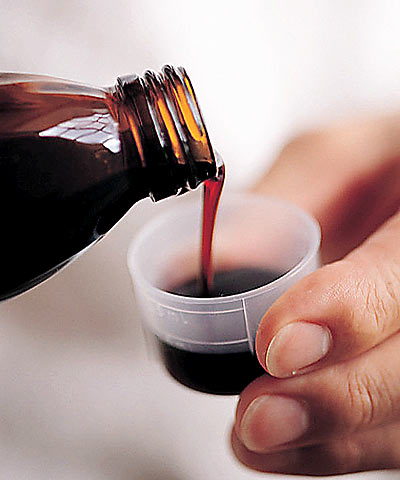
Perhaps the most common of all of the excuses, when defendants test positive for alcohol they often say that it is from drinking cough syrup. I couldn't figure out the exact amount, but alcohol is listed as an inactive ingredient in Nyquil. Some sources stated as low as 10% and some as high as 25%. Nyquil can cause a positive alcohol test. However, it would seem that one would need to drink a large quantity to have a positive BAC or drink cough syrup immediately before blowing. MOST OF THE TIME, this excuse does not hold up. Oftentimes Judges see through this smoke screen and view the defendant as being dishonest and uncooperative. Further, a term of probation is typically no consumption of alcohol, because there is alcohol in some cough syrup this is a straightforward violation. HOWEVER, in some instances (specifically in license appeals at the DLAD) we have been successful in bringing this defense where there is corroborating evidence and/or a doctor's note.

Continue reading "Tired Explanations Part 1: Cough Syrup, Second Hand Marijuana Smoke, and Other Excuses That Don't Hold Up In Court" »

Operating While Intoxicated in Westland, What to Expect in the 18th District Court

December 14, 2011,

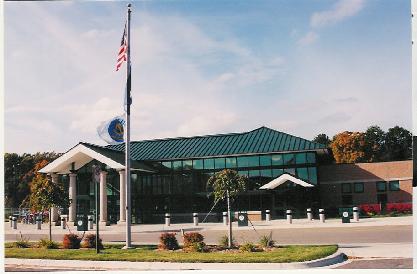
Westland District.jpgThe intention of this post is to give you a brief overview of what to expect if you are being charged with Operating While Intoxicated (OWI) arising out of the 18th District Court in the City of Westland. The 18th District Court is presided over by the Honorable Judges Sandra Ference Cicirelli and Mark A. McConnell. Based on our firm's experience, the 18th District Court will treat you fairly and your case will be handled efficiently. By treated "fairly", we mean that if you are a first offender whose OWI is reduced to the lower offense of Operating While Visibly Impaired (OWVI), the Court's sentence will be reasonable as I will explain. When I say that a first offense will be handled "efficiently", we mean that your case can be handled in 1 court appearance if it is resolved by way of plea bargaining under certain circumstances. However, if motions are filed or your case is scheduled for trial, there will be other necessary proceedings. This blog will focus on the vast majority of cases which are resolved by way of a plea bargain.

When charged with a crime, our firm will consider all of the evidence and make recommendations to our clients as to the best course of action. In reality, the vast majority of criminal offenses and drunk driving cases are resolved by means of plea bargaining. When representing a client charged with an OWI who does not have a good case for trial, our law firm typically has three goals;

-Get the charge reduced, typically to an "Operating While Visibly Impaired" (colloquially referred to as an "OWVI" or simply an "Impaired");

-Avoid jail time; and

-Minimize the length, terms and conditions of probation.

Discussed in other blog posts, most drunk driving cases do not make great cases for trial. Presumptive evidence of intoxication is established by a valid traffic stop, failed roadside sobriety tests, and Blood Alcohol Content (BAC) results of .08% or greater. For that reason, we usually fight to secure the lesser charge of Impaired Driving and seek recommendations from the prosecuting authority for sentence leniency. The merits of the Impaired Driving charge have also been discussed at length in our previous blog posts. Generally, an OWI which is reduced to OWVI is less points, saves our clients $1,000.00 in driver responsibility fees, involves a shorter period of action against one's license and does not involve any mandatory period of license suspension before issuance of a restricted license.

In most other courts, the process to resolve a drinking and driving offense requires at least 3 court appearances which include pretrial conference, substance abuse assessment and sentencing. However, the 18th District Court will endeavor to handle the entire case on the same date. It is our experience that getting to the 18th District Court by 8:00 a.m., knowing our Client's case and being prepared to advocate with the prosecutor are essential for a case to be resolved in the efficient manner which I have described compared to cases which languish for several months and require multiple stressful Court appearances.

At the time of sentencing, the Court will determine the extent and terms of probation along with fines and costs. The maximum term of probation for a first offense Impaired Driving is 2 years. In our experience, first time offenders for Impaired Driving should expect 12 months probation in the 18th District Court. Probation may be reporting (to a probation officer) or non-reporting. Non-reporting probation is preferred and is less intrusive upon one's daily routine. The 18th District Court will normally allow time to pay fines and costs. However, in a recent case handled by our firm, the Court said that our client's reporting probation will be converted to non-reporting probation after payment of fines and costs.


Continue reading "Operating While Intoxicated in Westland, What to Expect in the 18th District Court" »

Probation: Modification of Conditions or Early Termination In Macomb County District and Circuit Courts

June 30, 2011,

Jerry_Maguire_movie_poster[1].jpg

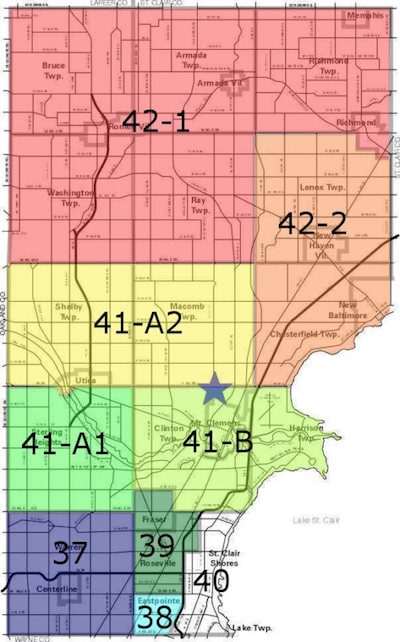
In Michigan, when an individual is sentenced for a crime, the Court may place the person on probation for a specified term. The maximum term of probation that may be imposed for a misdemeanor is 2 years and 5 years for most felony cases. All persons convicted of a felony are monitored by the probation office assigned by the Circuit Court. In Macomb County, the probation department is located at 32 Market Street, Mt. Clemens, Michigan. Some of the District Courts, including the 40th District in St. Clair Shores, the 38th District in Eastpointe, the 41-A District which covers Sterling Heights and Shelby Township, the 41-B District in Clinton Township, have their own probation departments.

Typically, the terms of probation after sentencing include regular meetings with a probation officer, alcohol testing, drug testing, and counseling. Probation can be disruptive to one's daily routine and compliance with numerous conditions can interfere with home, school and employment.

Our firm receives calls almost daily from clients who are on probation and want to get out of the system. I find myself using a line from the movie Jerry Maguire when someone calls our law firm and wants to get off probation; "HELP ME HELP YOU." The following will explain what I mean.

Our firm will go to bat for the person who has substantially complied with the terms of probation. A probation order can only be modified or amended by the sentencing Judge. This means that a motion and a hearing must be scheduled to request relief from probation conditions. It is up to the client to supply positive information which will be included in a motion and advocated at a hearing. Your probation officer may be your best witness at a hearing to modify probation. A client wishing to get out of the system must impress the probation officer by being punctual, completing all programs and having a good attitude. Don't be the person who is late for probation meetings, fails drug tests and gives the probation officer a hard time and then expect the probation officer to get on board with your plight to have your probation modified. Remember the movie Jerry Maguire, life improved for the aspiring pro football player (Cubba Gooding, Jr.) when his attitude improved.

We usually like our clients to have served at least ½ of the total term of probation before we will file a motion to terminate probation. In other words, if someone gets two (2) years of probation, a motion to terminate probation may be considered after one (1) year of compliance. The Court may entertain outright termination of probation, amending probation from reporting to non-reporting or modification of conditions.


Continue reading "Probation: Modification of Conditions or Early Termination In Macomb County District and Circuit Courts" »

Restrictions for Criminals Placed on Probation In Michigan; Nighthawks Make Random Visits For Violators In Some Michigan Counties

May 25, 2011,

Thumbnail image for PROBATION CONDITIONS MACOMB1.jpg
In Michigan, probation cannot exceed 2 years for misdemeanors and 5 years for felonies. Probation is determined at the time of sentencing and may include a component of incarceration. For example, our firm recently represented someone who was convicted of a felony, drunk driving third offense. The offender had 6 total drinking and driving convictions on his record and faced 1-5 years in prison. The Court was persuaded by the defendant's employment and decision to begin a substance abuse treatment program. The defendant was sentenced to 2 years probation with the first 30 days in jail the Macomb County Jail; the minimum period of incarceration allowed by Michigan statute for felony drunk driving.

The least restrictive type of probation is called non-reporting or unsupervised. This means that the Defendant must be on good behavior during a period of probation and will be discharged at the end of probation provided the person does not violate any criminal laws. In addition, the Court may attach some conditions with non-reporting probation such as not leaving the State of Michigan without approval and attending an appropriate program (AA meetings or anger management).

Probation may also be supervised or reporting. The Court has broad power to place limitations and restrictions on otherwise legal behavior for a person who gets probation. For example, someone placed on probation may be prohibited from entering into a strip club or from using a computer. The image which is attached to this page is a copy of the probation conditions which are possible in Macomb County. Failure to abide by any of these provisions can result in termination of probation and incarceration.

Some counties, including Oakland and Ingham, employ a program known as Operation Nighthawk to monitor the behavior of those who are placed on probation. Operation Nighthawk is a program whereby probation officers along with law enforcement officers randomly visit probationers, usually after hours, to verify compliance. In an article which appears in the Ingham County Legal News, 55th District Court Judge says, "Unannounced sweeps by our probation office with local law enforcement officers are the backbone of Operation Nighthawk. NIGHTHAWK encourages probationers to follow their probation orders."

Continue reading "Restrictions for Criminals Placed on Probation In Michigan; Nighthawks Make Random Visits For Violators In Some Michigan Counties" »

42-1 District Court in Romeo Lists Fines and Costs For Drunk Driving and Criminal Cases

April 5, 2011,

ROMEO LIST.jpgThe 42-1 District Court, located in the City of Romeo, has posted a list of possible fines and costs for various crimes. The list also contains a warning as follows: ALL FINES AND COSTS ARE DUE AT THE TIME OF SENTENCING, WE DO NOT GIVE TIME TO PAY. This warning is followed by strong language that failure to pay fines and costs will result in jail time.

The approximate range of fines and costs for a first offense Operating While Intoxicated (OWI) or Impaired Driving (OWVI) in the Romeo District Court is from $1,000.00 to $1,500.00. For a second offense, the range jumps to $1,500.00 to $2,500.00. This does not include other costs such as probation oversight expenses, substance abuse screening, driver responsibility fees, police/municipal response costs, random testing and substance abuse counseling. The driver responsibility fee for OWI is $1,000.00 per year for 2 years and for $500.00 per year for 2 years upon conviction of Impaired Driving.

The fines and costs for drinking and driving offenses in the 42-1 Court in Romeo tend to be on the high side but are consistent with fines and costs imposed in other courts such as the 41-B District Court, Clinton Township, which is also located in Macomb County. Information about other district courts located in Macomb County can be found at the county's website.

The 42-1 District Court has jurisdiction over the following municipalites: Romeo, Washington Township, Ray Township and Armada Township and Memphis.

Dealing With the Probation Department Prior to Sentencing In Michigan Criminal Cases

August 15, 2010,

Your First Contact with the Probation Department

If you are convicted of a a Michigan Criminal offense, your first contact with probation will occur after you are found guilty. In felony cases, the Judge is required to order a presentence report which is prepared by the probation department. In misdemeanor cases, a presentence report is discretionary unless it involves a drinking and driving offense. If you are convicted of a drinking and driving offense in Michigan, substance abuse evaluations are mandatory. When you are referred to the probation department for an investigation, you should remember that the probation officers have a huge caseload and are often unable to hold your hand through the process. Our Clinton Township criminal defense attorneys have found that the best way to deal with the probation officers is to help them help you! I advise my clients to:

  1. Be early for any appointment, dress appropriately.
  2. Do not draw attention to flashy jewelry or clothing with messages.
  3. Be extremely polite and do not display a bad attitude or hostility.
  4. Have a folder with organized copies of any positive documents ready.
  5. Do not ask the probation officer to make copies. This will show your lack of organization and need to be managed and supervised.
  6. Be ready to provide a drug test. If you fail a test, you are just asking for additional conditions such as random testing, counseling.
  7. Get into counseling before your interview if you need help and provide the probation officer with proof.

Your Probation Officer Writes Everything Down That You Say

When talking to the probation officer, you should fare better by following the above guidelines. Your Michigan Probation Officer may have 100's of clients. The probation officer has power to make numerous recommendations to the Judge about your sentence conditions. Do not volunteer information to the probation officer because it will go into your permanent file. For example, if you used cocaine 20 years ago and it doesn't show up on your record and is no longer an issue, do not volunteer this information which may result in additional probation conditions. Similarly, do not volunteer details about your criminal case. Your probation officer will already have the police report and you run the risk of incriminating yourself if you talk about the case too much. It is best to ask your attorney what you should say about your criminal case. Most importantly, do not make things worse by lying to the probation officer. The probation officer will have your past records and may be testing you by asking questions where the answers are already known.

Be Proactive To Reduce Conditions And Supervision

If you can show the probation officer that you are someone who does not need to be monitored or supervised by the system, you may save yourself from having burdensome conditions imposed. In this regard, if you need counseling, our lawyers may direct you to begin a program and provide proof of counseling at your probation interview.

After You Are Placed On Probation

In Michigan, you can be placed on probation for up to 5 years for a felony and 2 years for a misdemeanor. After you are placed on probation, you may be required to report to a probation officer once per month or as directed by the Judge. Remember, probation and supervision is imposed upon people that cannot manage themselves. You lose freedom as a result of illegal conduct. The idea is to dig yourself out of the system and regain your liberty. Again, help the probation officer help you. If you are compliant, the probation officer may recommend that your probation be non-reporting or that your probation be terminated early. If you cannot comply with a condition of your probation, you should explain your situation to your probation officer as soon as possible. The probation officer may try to help you with this problem. If the probation officer does not help you, then you will need to file a motion to modify your probation before the same Judge that sentenced you. If you have been a good probationer, your officer may be able to help you when you have a hearing before the Judge. You will want to consult an attorney if you cannot comply with the conditions of your probation because you can be sentenced to jail time for a probation violation.