Recently in Federal Crimes Category

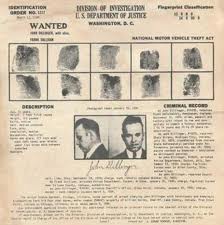
Do criminal records ever completely vanish?

September 27, 2012,

dilliger.jpg

As an active criminal defense attorney in Macomb County, our firm is frequently asked whether a criminal record can be totally erased, disappear or vanish. Unfortunately, the answer is no.

The Michigan Law Enforcement Information Network (LEIN)

The moment an arrest occurs, or a warrant is issued by a court, a record is generated on the Michigan Law Enforcement Information Network (LEIN). Only criminal justice agencies or other authorized agencies (courts) are granted access to the LEIN. A law enforcement officer or court employee who abuses the system faces discipline. This link provides a list of entities who are authorized to utilize the LEIN system.

Public Access to Criminal Records (ICHAT)

Public access to criminal records is attainable on the internet via the Internet Criminal History Access Tool (ICHAT LINK). Criminal (public) records which are maintained by the Michigan State Police Criminal Justice Information Center are accessible by using the ICAT system. Criminal records include all felonies and misdemeanors that are punishable by over 93 days. An offense which is expunged or dismissed pursuant to HYTA (youthful offenders) or MCL 333.7411 (drug crimes) or MCL 769.4a (domestic violence / domestic assault) are not accessible to the public on ICHAT.

What happens to my record after my criminal charge is expunged or dismissed?

A record on the LEIN system will be suppressed if the criminal charge(s) are expunged or dismissed pursuant to HYTA, MCL 333.7411 or MCL 769.4a. Please notice that I used the word "suppressed", not "erased". When a record is suppressed, there is technically no public record of the case. However, a permanent "non-public" record is retained for law enforcement and court purposes. So when a case is expunged or dismissed pursuant to HYTA or MCL 333.7411 or MCL 769.4a, it is merely removed from the public view (not accessible on ICHAT).

What happens to my record if I am arrested but never charged with a criminal offense?

An arrest does not necessarily result in criminal charges. This is another problematic area which arises regarding criminal records. As I mentioned above, once an arrest occurs or a warrant is issued, the information is recorded into the LEIN. Even if the case never results in a criminal charge, it is almost impossible to have the information regarding the arrest or warrant erased! We know that this can cause huge misunderstandings for innocent parties. Even if a person is found not guilty at trial, a record is maintained of case which includes the charges against the individual. You may look up records of cases on the Macomb County Circuit Court website (use Internet Explorer).

Expungement of a Michigan Criminal Offense

If you have a criminal record, an attorney can determine if you are eligible for an expungement. The process to expunge a criminal offense is done by filing an "Application to Set Aside Conviction", strict compliance with other filing requirements and serving various government agencies and the victim of any crime. You may visit our website for more information about expungement of a Michigan criminal offense. If you are eligible for expungement, we will ask for you to obtain a set of fingerprints and a certified copy of your conviction to begin the process.

Federal Criminal Records, No Right to Expungement for Federal Crimes

Please be advised, there is no law that permits expungement for a federal crime other than minor drug offenses! The federal equivalent to an expungement is a "presidential pardon". The process to request a "presidential pardon" for a federal crime is arduous and is made through the United States Department of Justice. The President of the United States cannot pardon someone for a state crime.

Be proactive about your records!

More than ever, records are retained by private (non-government) organizations that sell information on the internet to anyone with a credit card. Literally 1000's of organizations collect information and sell it. Even if you are someone who is fortunate enough to get an offense expunged or dismissed, the information of an arrest may already be circulated to numerous entities that do not update the records or do anything to protect you.

If you are someone who has been involved in a criminal case, you should keep and retain copies of documents pertaining to the matter with your important permanent personal records. If at some point the case is dismissed or expunged, I also recommend that you obtain a copy of the dismissal or expungement from the court after the case is concluded. This may come in handy if an old arrest shows up on an internet website. The person who has obtained a copy of the final disposition will at least be able to produce proof of the dismissal which may negate the impact of inaccurate or incomplete record(s).

Click here for Michigan State Police links to obtain criminal records.


Do court appointed lawyers work for the police and prosecutor?

September 11, 2012,

COURTROOM SCENE.jpg

This blog is part of a series of blogs which explores some frequently asked criminal law questions.

I cannot believe how many times I have been asked this question: Do court appointed lawyers work for the police and prosecutor?

Answer: ABSOLUTELY NOT.

Pursuant to the 6th Amendment to the United States Constitution, a person who cannot afford an attorney may be entitled to an attorney appointed by the Court. The person requesting a Court appointed attorney may have to repay the cost for the attorney at a later date when he or she is able to do so.

Loyalty to the client is a vital element every attorney-client relationship. Therefore, criminal defense attorneys are prohibited by the Michigan Rules of Professional Conduct from acting for anyone other than the "client" even though the fees may be paid by another person or entity!

The applicable Michigan Rule of Professional Conduct provides: A lawyer shall not represent a client if the representation of that client may be materially limited by the lawyer's responsibilities to another client or to a third person, or by the lawyer's own interests.

Links to some other frequently asked questions:

Can my case be dismissed if I wasn't advised of my Miranda rights?

Am I entitled to make a phone call if I am arrested?

Can I be charged with a crime if only one person says I did it and there are no other witnesses or evidence?

Proving Drug Possession: "Actual Possession" is not always required

August 31, 2012,

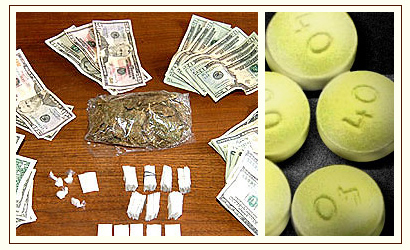
Every drug crime requires the element of "possession". In fact, drug crimes rank high on the list of frequently occurring felony cases in Michigan. Drug crimes include: "possession" or "possession with intent to deliver" marijuana, heroin, cocaine, MDMA or analogues.

Drugs.jpg

Whenever someone is charged with any drug crime, our criminal defense attorneys will question whether the accused legally possessed the alleged drugs.

Michigan Courts Define Possession In Criminal Cases

In Michigan, a person must knowingly and intentionally possess an illegal drug to be charged with possession of a controlled substance under Michigan's drug possession statute. But what does that mean?

The courts in Michigan consolidate possession into two categories

1. Actual possession: an individual has drugs on their person (pocket or shoe)
2. Constructive possession: individual has the right of control and dominion over the controlled substance


Actual possession is simple. If the drugs are in a person's pocket, that person possesses the drugs. But what if the drugs are found in a home where multiple people are present? What about in a car with more than one occupant? What if the person was unaware the drugs were in the car? Determining whether or not the individual had a right of control or dominion over the drugs, or over the premises (car, apartment, house) in which the drugs were found, is critical in these situations. However, an individual's presence in the same house or automobile as the drugs is insufficient to establish possession; a connection between the drugs and the individual must be found as well. When a person is merely present at a place where drugs are found or is an innocent bystander, our firm will argue that there is insufficient evidence to establish the element of possession.

Michigan Courts broadly interpret possession:

People v Nunez (2000): In this case, police entered a home and discovered, along with several occupants, a large stash of cocaine. Although Mr. Nunez didn't have the cocaine on his person, he was charged and convicted of possession of cocaine. The police arrived at their conclusion by observing the apartment and its contents. Mr. Nunez had a key for the apartment and stayed at the apartment most of the time. His name was also found on bills within the apartment. The connection between Mr. Nunez and the drugs was straightforward in this case.


People v Meshell (2005): In this case, police observed a man emerging from a garage in which they later discovered methamphetamine. Upon entering the area, police noticed a strong chemical odor coming from the garage. Mr. Meshell was the only person in the area of the garage and when police ran his record, they discovered past issues with methamphetamine. Because Mr. Meshell had past issues with meth, it was obvious that he knew the smell. He was also the only one in the area at the time police observed him exiting the garage.

People v McKinney (2003): In this case, police entered a home and discovered a large amount of cocaine. Police found crack in drawers containing women's clothing, and linked the drugs to Ms. McKinney because she was frequently staying at the apartment. Drugs were also found within the pockets of women's clothing in the bedroom she was sharing with the owner. By using the drug's location as evidence, the police were able to successfully charge and convict Ms. McKinney of possession of cocaine.

As you can see from the cases above, police can use the surrounding circumstances to establish an individual's possession of a controlled substance:

1. Any past drug-related criminal activity
2. The smell of the drugs, particularly marijuana
3. Whether or not the person was alone
4. Utility bills for the home in which the drugs were found


Continue reading "Proving Drug Possession: "Actual Possession" is not always required" »

Federal Criminal Cases In Michigan

January 4, 2012,

fbi-4-30-09[1].jpg

In the United States, there are crimes which may be prosecuted at the State level based upon violations of State laws. A Federal crime is one which involves a violation of a Federal law. Many criminal offenses may fall under the jurisdiction of both the State and Federal laws and either or both branches of government may prosecute. The doctrine of double jeopardy does not preclude both State and Federal prosecutions under the doctrine of dual sovereignty.

There are literally thousands of Federal laws. Many Federal crimes are listed in Title 18 of the United States Code. In addition, there are several Federal agencies with authority to investigate Federal offenses including: Federal Bureau of Investigations (FBI), Drug Enforcement Agency (DEA), Alcohol Tobacco and Firearms (ATF), United States Marshal Service (USMC), United States Secret Service, Immigration and Customs Enforcement, United States Postal Inspection Service and Homeland Security. Postal Inspectors investigate any crime in which the U.S. Mail is used to further a crime by use of the mail, telephone, or on the Internet (mailfraud).

In Michigan,United States Districts Courts (Federal courts) are located in Detroit (Eastern District), Lansing, Grand Rapids, Ann Arbor, Port Huron, Flint and the upper peninsula. Federal criminal defense attorneys are required to adhere to the Federal Court Rules. The formalities, procedure, sentence guidelines and process of the Federal courts are inherently stricter than the State courts. All of this means that anyone faced with a Federal criminal investigation or Federal criminal charge(s) should retain a qualified Federal criminal defense lawyer.

If you are contacted by any Federal law enforcement agency concerning an investigation, you should immediately consult with an attorney. The Federal criminal justice system is fraught with legal traps. As soon as you talk, you may face an indictment for lying to a Federal agent which can carry 5 years in prison. It is always best to obtain the business card of the agent or obtain a name and telephone number.

It is serious business when our law firm receives a call from a client who is the subject of a Federal investigation or is indicted for a Federal crime. A Federal search warrant will almost always result in the seizure of documents, financial records and computers. An arrest may occur at the same time of the search. However, criminal charges (indictment) may not occur for many months (or even years) after a criminal investigation or search and seizure. During the pendency of a Federal case, a criminal defense attorney will explore all possible options with the United States Attorney/USA (Prosecutor) including cooperation, plea agreements (Rule 11) and trial.

Federal crimes may necessitate the need for a criminal lawyer that specializes. Federal crimes include but are not limited to the following: mail fraud, tax fraud, drug crimes, internet crimes, federal sex crimes (use of the internet), gambling crimes, bank/financial crimes, Medicaid fraud, racketeering, money laundering, computer fraud, pollution, crimes upon waterways or upon federal property and identity theft. At our firm, we are associated with Federal criminal lawyers throughout Michigan. In addition, we can arrange for legal representation by experienced and qualified Federal criminal attorneys anywhere in the United States of America in all areas of specialty.

Possession of Drugs, Guns, Stolen Property & Child Porn; Michigan and Federal Laws Do Not Require Actual Possession

March 25, 2010,

STOLEN PROP.jpg

When a client is charged with a crime which involves "possession", our Macomb County criminal defense attorneys delve into the facts and details of the case, along with the applicable Michigan laws, which pertains to the issue of possession. For example, all drug crimes require the element of possession. This blog is about the applicable Michigan laws which are applied or argued when the issue of "possession" is an element in a criminal case.

Many Michigan criminal laws, especially drug crimes and stolen property laws, contain an element or requirement of "possession". Possession of child pornography cases invariably involves legal arguments by criminal defense lawyers and prosecutors regarding the issue of possession. In this regard, specialized computer forensics or other technical evidence is used by law enforcement to establish the element of "possession" and by criminal defense attorneys to contest the issue. Michigan laws which make possession in and of itself the crime allows for arrests and convictions without proving the use or sale of a prohibited item.

There are several terms which are used to describe different types of possession. For example, possession may be constructive, illegal, joint, legal, physical, or sole. Historically, actual possession was required for a criminal possession conviction. In other words, a person could not be charged with a crime unless he was "caught red handed" with the illegal property. In the 1920s, courts expanded criminal possession to include "constructive possession". In an early Michigan criminal case to use constructive possession, the court found a defendant guilty of possessing illegal liquor in trunks in the actual possession of another person (People v. Vander Heide, 211 Mich. 1, 178 N.W. 78 [1920]). Later cases, especially narcotics cases, have continued to expand the law of criminal possession.

Possession versus Ownership: Possession is not the same as ownership. The phrase "possession is nine-tenths of the law," is often used to suggest that someone who possesses property can face legal consequences. The owner of an object may not always possess it.

Actual possession is what most of us think of as possession-that is, having physical custody or control of an object" (United States v. Nenadich, 689 F.Supp. 285 [S.D. N.Y. 1988]). Actual possession, also sometimes called possession in fact, is used to describe immediate physical contact. Frequently, a set of facts clearly indicate that an individual has possession of an object but that he or she has no physical contact with it. To properly deal with these situations, courts have broadened the scope of possession beyond actual possession.

Constructive possession is a legal theory used to extend possession to situations where a person has no hands-on custody of an object. Constructive possession is frequently used in cases involving drugs, guns and stolen property in Michigan criminal cases. Constructive possession, also sometimes called "possession in law," exists where a person has the ability to control the object even if the person has no physical contact with it. For example, people often keep important papers and other valuable items in a bank safety deposit box. Although they do not have actual physical custody of these items, they do have knowledge of the items and the ability to exercise control over them. For legal purposes, they are considered to have constructive possession of the contents of the safety deposit box.

Link to Blog: Proving Possession In Drug Crimes

Continue reading "Possession of Drugs, Guns, Stolen Property & Child Porn; Michigan and Federal Laws Do Not Require Actual Possession " »