Recently in Drug Offenses Category

How Will a Criminal Charge Affect My Concealed Pistol License (CPL)?

May 6, 2013,

concealed pistol.jpg
At Abdo Law, we deal with many clients that maintain a Concealed Pistol License, or CPL, and the question always arises: will I lose my CPL if I'm charged or convicted of a crime? The answer is maybe, but Abdo Law's dedicated attorneys will do everything in their power to guide clients through the process.

The State of Michigan sets guidelines for those wishing to obtain a CPL:

• Applicant must be at least 21 years of age;

• Be a citizen of the United States or an immigrant lawfully admitted into the United States (green card holders)

• Be a resident of the State of Michigan for at least 6 months prior to application

• Successfully complete a pistol safety training course

• The applicant may not be subject to involuntary hospitalization, an order finding legal incapacitation or a finding of not guilty by reason of insanity

• Not be subject to a conditional bond release that prohibits the purchase/use of firearms

• Not be subject of a personal protection order (PPO)

• Applicant has not been prohibited from having firearms in his/her possession, pursuant to MCL 750.224f

• Have no felony charge pending in Michigan, or any other jurisdiction

• Applicant was not dishonorably discharged from the United States Armed Forces

In addition to the above requirements, applicants for a CPL must prove to the State of Michigan that they have not been convicted of certain misdemeanors. Some convictions bar the applicant for 8 years and others bar the applicant for 3 years. Lists with examples of such crimes have been provided below.

A question that occasionally presents itself is whether a matter that was disposed of under HYTA, 7411, 769.4a, or 771.1 will affect a CPL license. It is my understanding is that a CPL typically will not be granted to individuals on probation, even with a deferral. These dispositions still show up on the back end of records systems for law enforcement. Moreover, my understanding is that while it is possible to get a CPL after a case disposed of with HYTA or 7411, it is less likely for a case concluded with 769.4a or 771.1. Before being granted the license, in Macomb County for example, you need to first sit before a board. Somebody who just got off probation, even with a 769.4a, may have trouble getting a CPL even though the case has been dismissed. Being that the charge tends to indicate violent behavior, it is my opinion such an individual will have more difficulty getting a CPL than someone with a 7411 deferral. Please be advised, this is just my opinion.

Nonetheless, if you believe your current or potential gun rights could be jeopardized you should engage counsel immediately. Deferrals, reductions, and dismissals could be helpful in reducing the time that you are ineligible for a CPL. On the following page we have provided crimes that make applicants ineligible for a CPL.

Continue reading "How Will a Criminal Charge Affect My Concealed Pistol License (CPL)?" »

Everything You Want to Know About Pretrial Conferences in Macomb County

December 7, 2012,

PT blog picture.jpg

This year, we have published several blogs dedicated to "frequently asked (criminal law) questions". Whenever possible, we endeavor to avoid legalese by providing articles in layman's terms. The focus of this blog is pretrial conferences in Macomb County District Courts.

What is a pretrial conference?

A pretrial conference is a meeting that is attended by the attorneys for the parties in a criminal or civil case. The major purposes of a pretrial conference are to facilitate resolution of a case, management of a case for trial or management of a case regarding pertinent issues (as listed below). A pretrial conference is scheduled after either a criminal or civil case is filed with the court, a case number and a Judge are assigned. In Macomb County, criminal pretrial conferences are held soon after the arraignment. For misdemeanors, which occur in Macomb County, the pretrial conference will always be held at the district court (click here for complete listing of links to Macomb County District Courts). Felony pretrial conferences can occur on the date scheduled for a preliminary examination and again after the case is bound over to the circuit court. A person charged with a crime (the defendant) is required to be present on the date scheduled for pretrial conference. However, he or she is usually not allowed in the conference room with the attorneys. On the other hand, police officers and victim's rights advocates with court business are allowed in the conference room. Likewise, an alleged victim may be present at the pretrial conference as the prosecutor must obtain the victim's consent for a plea bargain in most criminal cases.

The direction of a criminal case is often determined after a pretrial conference. Pretrial conferences are a vital tool, which a skilled criminal defense lawyer will utilize for several reasons:

  • Promote dismissal of the charge(s) under certain circumstances
  • Negotiate a favorable plea bargain
  • Address bond, bond conditions and/or release from jail
  • Adjourn the pretrial conference to seek a deviation when strict policy obstructs a plea bargain
  • Request modification of no-contact order (domestic violence cases)
  • Negotiate restitution when financial losses are claimed
  • Meet with the Judge when judicial support is needed to discuss various matters, such as sentence bargains, creative plea bargains or to simplify issues of the case when set for trial
  • Size up the prosecution's case, witnesses and evidence
  • Request copies of discovery (police reports, videos, chemical test results)
  • Schedule one or more motion dates to attack the evidence, or to weaken the case
  • Set future pretrial conference date(s) when delay can tend to improve the defense position
  • Schedule the case for a bench or jury trial

Factoid: A person who is accused of a crime is not considered a "defendant" until that person is formally charged with a crime. Our criminal defense lawyers never refer to our clients as "defendants" when speaking to the court or prosecutor because of negative connotations. We prefer to refer to our clients by their given name or "the accused".

What is the attorney's role at a pretrial conference?

The best way for me to summarize an attorney's role at a pretrial conference is by mentioning a few passages from the Michigan Rules of Professional Conduct.

A lawyer is a representative of clients, an officer of the legal system and a public citizen having special responsibility for the quality of justice.

As advocate, a lawyer zealously asserts the client's position under the rules of the adversary system.

As negotiator, a lawyer seeks a result advantageous to the client but consistent with requirements of honest dealing with others.

What is the defendant's role at a pretrial conference?

Macomb County (as well as Oakland, Wayne and St.Clair), require the attendance of the defendant at the pretrial conference. If the defendant "fails to appear", an arrest warrant may be issued. Prior to the pretrial conference, our criminal defense attorneys discuss goals and/or strategies with our clients. Even though the defendant is not present in the conference room, he or she is well informed of our intentions. We advise our clients to be punctual, dress appropriately and to refrain from discussing their case with anyone at the courthouse. We assume that our client's conduct is "being monitored". Therefore, we discourage any interaction with the victim or any conduct which draws unfavorable attention. Any progress towards working out a deal can be blown if a client offends certain key decision makers at the pretrial conference or at any other time while a criminal case is pending!

Is there an appearance in the courtroom after the pretrial conference?

After the pretrial conference, the defendant and his or her attorney will appear in open court and inform the Judge of the results. The Judge has the final say regarding the outcome of a pretrial conference. For example, certain plea bargains may be against the Judge's own policy and may require some persuasion and legal authority. In addition, the Judge may show frustration when the parties are attempting to adjourn (delay) cases. Since adjournments tend to clog court dockets, the Judge will require that "good cause" be shown.

Our experience is that a pretrial conference is an invaluable opportunity to advocate on behalf of our clients. Advocacy includes elements of assertiveness and diplomacy. We often can achieve a disposition after the pretrial conference. This may result in a plea bargain, which may have the effect of dismissing the criminal charges in exchange for completion of probation. It is our job to protect our client's rights and seek the best possible outcome, which may mean saving a client from being exposed to egregious facts and the expenses of an unnecessary trial. The defendant remains the ultimate decision-maker when presented with options after the conclusion of a pretrial conference.

Some other important things to know about pretrial conferences:

-Denial of a pretrial conference may constitute a denial of "due process" rights. US vs. Ataya, 864 F2d 1324 (1988)
-No admissions made by the defendant's lawyer in the setting of a pretrial conference are admissible against the defendant during trial.
-Pretrial Conferences for federal criminal cases are governed by Federal Rule of Criminal Procedure 17.1

The addresses and phone numbers for all Macomb County district courts can be found at the following links:


Warren
37th District Court

Eastpointe
38th District Court


Roseville and Fraser
39th District Court

St. Clair Shores
40th District Court

Sterling Heights
41-A District Court

Shelby, Utica and Macomb Township
41-A District Court

Clinton Township, Mt. Clemens, Harrison Township
41-B District Court

Romeo, Washington Township, Armada, Bruce Township, Ray Township, Richmond, Memphis
42-1 District Court

New Baltimore, Chesterfield Township, Lenox Township, New Haven
42-2 District Court


We continue to provide public information to our readers - The Top 50 Most Frequently Charged Felonies in Michigan

November 13, 2012,

Top 50 Artwork.png

The Michigan Bar Association releases crime data for the state from time to time. While researching cases, we came across an informative article written by the Michigan Bar Association regarding the most frequently charged felonies in the State of Michigan. This article can be viewed here: Top 50 Felonies Most Frequently Charged in Michigan. Based upon our experience, I would agree: this list is an accurate representation of the types of cases that our Macomb County criminal defense firm handles on a frequent basis.

Listed below is a selection of the top felonies charged in Michigan:
Possession of a Controlled Substance (heroin, cocaine, analogues)
• Possession of Marijuana (double penalty for second offense)
• Possession of methamphetamine (MDMA)
Possession with intent to deliver less than 50 grams (cocaine, narcotic)
• Possession of an Analogue controlled substance (pills)
• Possession with intent to deliver marijuana
• Manufacturer or delivery of less than 5 kilograms of marijuana
Drunk driving - 3rd offense
• Assault with Dangerous/Deadly Weapon ("Felonious Assault")
Assault with Intent to do Great Bodily Harm
• Resist/Obstruct a Police Officer & fleeing and eluding
Criminal Sexual Conduct - 1st, 2nd, 3rd and 4th Degree
• Keeping or Maintaining Drug House
Home Invasion
• Retail Fraud 1st Degree (Retail Fraud 2nd and 3rd Degree are misdemeanors)
• Larceny in a Building, Larceny from a Vehicle

Sometimes, the amount of loss will determine whether an offense is classified as a felony. Offenses, such as embezzlement and malicious destruction of property, are also on the list of top felonies when the value is $1,000.00 or greater. If the value of stolen property was less than $1,000.00, the offense would qualify as a misdemeanor.

Pursuant to the Michigan Sentencing Guidelines, felonies are further broken down into categories that determine the accompanying sentence. Punishment for each class is listed below:
• Class A - Life imprisonment
• Class B - Up to 20 years in prison
• Class C - Up to 15 years in prison
• Class D - Up to 10 years in prison
• Class E - Up to 5 years in prison
• Class F - Up to 4 years in prison
• Class G - Up to 2 years in prison
• Class H - Jail or other intermediate sanctions, such as fines

Note: A future blog will be dedicated to the Michigan Sentencing Guidelines.

Below, you will find connections to some of our blogs that are pertinent to felony cases:

All Felony-related Posts

Drug Possession

Felony Assault - Assault with a Deadly Weapon

Fleeing, Eluding and Obstructing the Police

First Degree Retail Fraud and Larceny

Third Drunk Driving Conviction

Child Abuse and Neglect

Felony Marijuana Possession

Continue reading "We continue to provide public information to our readers - The Top 50 Most Frequently Charged Felonies in Michigan" »

Illegal Searches Part 3: The Home

November 6, 2012,

police-raid.jpg

In this concluding portion of our series, we will discuss illegal searches as they relate to an individual's home. The following will serve as a paradigm for exploring police searches of the home;

Were the police allowed to enter the home?
Were the police allowed to search the home?
What was the scope of the permissible search within the hom
e?

The 4th Amendment provides the most safeguards to people in their homes. This stems from colonial America and is one of the foundational principles of the Bill of Rights. The 4th Amendment is premised on the idea that the home is one's castle and the government cannot enter it unless there is good reason to do so. Searches of the home can be separated into two categories, searches with and without warrants. A search absent a warrant is presumptively unreasonable. Without a warrant, police can only search somebody's home if there is exception to the warrant rule. However, this is one the situations in law where it is said the exception swallows the rule.

Searches WITH Warrants

This post will discuss two types of warrants, search warrants and arrest warrants. Arrest warrants will be discussed more as an exception to the warrant rule. A search warrant must be based on probable cause. Probable cause is presented via affidavit which must be signed by a judge or magistrate. Warrants can be defective on the grounds they are 'stale', or based on old information. They can further be defective on the grounds of scope and specificity. There needs to be some guidance as to what can be seized in order to limit officers' discretion. However, it can sometimes be difficult to challenge warrants because of the "good faith exception", often preventing the suppression of evidence where an improper warrant was relied on in good faith.

Searches WITHOUT Warrants

The major recognized exceptions to the warrant requirements are;

1) Consent (standing),
2) Exigent circumstances,
3) Emergency aid,
4) Search incident to arrest,
5) And plain view.

The police may enter a home where there is consent that is freely given. However, from a legal standpoint one must have standing (or the authority) to give consent. Somebody must be more than just a temporary guest in order to give the police permission to search somebody's home (an overnight guest, however, is sufficient). Where there is an immediate and pressing interest in preserving evidence, protecting police/the public, or preventing a suspect from escaping police can enter a home under the 'exigent circumstances' doctrine. Where there is a reasonable belief that somebody is in need of medical attention police may enter a dwelling. However, police must have more than 'speculation that someone inside side may have been injured' in order to justify a warrantless intrusion under this doctrine. As stated above, where an arrest warrant has issued police may enter a home to effectuate that arrest without a separate warrant. This does not allow the police to enter a third party's home and further they will be limited to only conducting a protective sweep within the home. Where a police officer is positioned somewhere he/she is legally allowed to be and can see evidence of a crime that officer can seize the item. The example that is often given is where police sees evidence of a crime through a window, absent an exception, they must still obtain a warrant to enter the home.

Continue reading "Illegal Searches Part 3: The Home" »

Michigan's Felony Marijuana Laws: Delivery of Marijuana, Growing Marijuana and Possession with Intent to Deliver Marijuana; Fines can Be Imposed Up to Ten Million ($10,000,000.00) Dollars!

October 24, 2012,

marijuana growing.jpg

Michigan has become a state that has decriminalized medical marijuana for qualified patients and caregivers. However, our criminal defense lawyers have seen an increase of marijuana busts which involve medical marijuana caregivers, as well as patients, who are engaged in one of the following:

-Exceeds the number of marijuana plants, or quantity of marijuana, that is legally allowed for medical marijuana caregivers and/or patients

-Sells or transfers marijuana to a person (or undercover police officer) other than a qualified patient

In both of the above scenarios, the police will conduct a search and seizure of drugs, money, firearms and other property that can seized pursuant to the forfeiture laws. If a motor vehicle is used to transport the marijuana, it may also be seized. As always, "cash is king" and the police love confiscating cash under the theory that the cash was obtained from illegal drug transactions or that the controlled under cover buy money was mixed in with other cash.

Usually, the police will gain information regarding an illegal marijuana operation from a confidential informant. The informant is usually someone who has been caught with drugs or marijuana and is promised leniency for his or her cooperation with authorities.

Felony Marijuana Delivery, Manufacturing and Possession with Intent to Deliver Penalties

The penalties associated with marijuana crimes (delivery, growing, possession with intent to deliver will depend upon the quantity of marijuana involved. All of these offenses are felonies which can carry a term in prison and massive fines:

-1-4 kilograms and less than 20 plants, not more than 4 years and $20,000 fine

-5-44 kilograms or between 20-199 plants, not more than 7 years and/or $500,000 fine

-45 kilograms or more, or 200 plants or more, not more than 15 years and/or $10,000,000 fine

When the crime is manufacturing (growing), any size plant counts towards determining the appropriate penalty (even a sprout).

Click here for other drug crime penalties

Contact an attorney if you are arrested, charged or if your home is searched and property seized

Our attorneys know how to navigate the felony marijuana laws as well as the Michigan forfeiture laws. In every case, our goals are to avoid a felony conviction, avoid prison and avoid harsh fines which could result in financial ruin of an entire family. Some of our recent cases include the following results:

-Agreement by police to waive forfeiture of a residence where marijuana was manufactured.
-Settlement of seized assets within 24 hours after raid or seizure.
-Reduction of multiple felony charges (delivery of marijuana) to misdemeanors.
-Dismissal of felony marijuana cases pursuant to HYTA for youthful offenders.
-Avoidance of additional charges for possession of firearm during commission of felony.
-Avoidance of cooperation with the police.
-Fines and costs well below the maximum!
-No Jail!

7411: Dismissals available for first offenders charged with "use" or "possession"

The misdemeanor offenses for "use" or "possession"of marijuana are eligible for special disposition pursuant to MCL 333.7411 ("7411") which allows for dismissal of the crime upon compliance with probation. However, a person is entitled to only one (1) disposition pursuant to 7411 in his or her lifetime.

Click here for medical marijuana application form

Continue reading "Michigan's Felony Marijuana Laws: Delivery of Marijuana, Growing Marijuana and Possession with Intent to Deliver Marijuana; Fines can Be Imposed Up to Ten Million ($10,000,000.00) Dollars!" »

Illegal Searches Part 1 of 3: General Rules and Searches of a Person

October 11, 2012,

Abdo Law Police Patdown.jpg

Oftentimes clients ask the following questions;

When the police searched me, was their search valid?
Were the police allowed to search me?
Did the police have the authority to search me?

Answer: It depends, this three part blog series will explore what types of searches are and are not valid.

The 4th Amendment of the U.S. Constitution states that no one should be subjected to an unreasonable search. Michigan's standard for searches is not higher than that of the Federal Government.

The general rule is that a search without a valid warrant is unreasonable. Where there is no warrant it must be demonstrated that there was both probable cause and a valid exception.

Beneath are the recognized scenarios where law enforcement may conduct a warrantless search;

1) When incident to a lawful arrest,
2) Under the "plain view doctrine",
3) Based on voluntary consent,
4) Pursuant to a custodial inventory search,
5) Pursuant to statute,
6) When presented with exigent circumstances,
7) Automobile searches,
8) And stop and frisk searches.

The Constitution affords the most protection to homes. Much less protection is extended to motorists and individuals. This post is devoted to what is required to search an individual without a warrant.

Terry Stops

Pursuant to the Terry v Ohio U.S. Supreme Court decision, a police officer has the authority to stop a suspect when he/she has reasonable suspicion that criminal activity is occurring. Basically, the officer must be able to describe the situation and explain his actions based upon his experience as a police officer. This pertains only to whether or not an officer can stop an individual who is walking down the street.

Whether or not the officer can search the individual is dependent upon the circumstances of the encounter. Although the person has been stopped based upon the officer's reasonable suspicion, the officer is limited in how he/she can search the individual's person. When the officer has reasonable suspicion that the person is armed and presently dangerous or is engaging in criminal conduct, they are entitled to search the individual. The frisk, as it's known, is limited to a search for weapons by patting down only the outer clothing of the person. During this search if an item is immediately recognized as contraband it may be seized pursuant to the "plain feel" exception. However, an officer cannot, for example, manipulate an objected suspected to be contraband through the clothes or remove that object in order to determine that it is indeed contraband.

Both the search and the stop must be reasonable. This is determined through an objective test, which means that if the behavior meets a certain threshold, it's reasonable. If not, the police behavior is unreasonable.

Courts have held the following -

1) It is not a violation of the Fourth Amendment for a cop to stop and question an individual on the street.
2) While a person's mere presence in a high crime area may not be enough to warrant a frisk, running from such an area is.
3) An officer's personal observation of criminal activity is not needed to form reasonable suspicion, it can be based on third party information.
4) Police officers cannot manipulate someone's carry-on luggage in order to determine its contents, whereas a canine sniff (properly limited in scope) is not a "search" as defined by law.
5) Police may question persons on public transportation.


Continue reading "Illegal Searches Part 1 of 3: General Rules and Searches of a Person" »

Proving Drug Possession: "Actual Possession" is not always required

August 31, 2012,

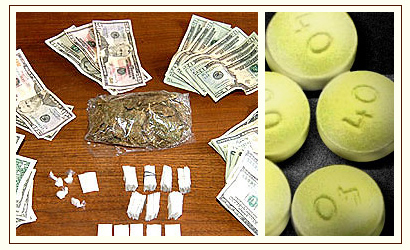
Every drug crime requires the element of "possession". In fact, drug crimes rank high on the list of frequently occurring felony cases in Michigan. Drug crimes include: "possession" or "possession with intent to deliver" marijuana, heroin, cocaine, MDMA or analogues.

Drugs.jpg

Whenever someone is charged with any drug crime, our criminal defense attorneys will question whether the accused legally possessed the alleged drugs.

Michigan Courts Define Possession In Criminal Cases

In Michigan, a person must knowingly and intentionally possess an illegal drug to be charged with possession of a controlled substance under Michigan's drug possession statute. But what does that mean?

The courts in Michigan consolidate possession into two categories

1. Actual possession: an individual has drugs on their person (pocket or shoe)
2. Constructive possession: individual has the right of control and dominion over the controlled substance


Actual possession is simple. If the drugs are in a person's pocket, that person possesses the drugs. But what if the drugs are found in a home where multiple people are present? What about in a car with more than one occupant? What if the person was unaware the drugs were in the car? Determining whether or not the individual had a right of control or dominion over the drugs, or over the premises (car, apartment, house) in which the drugs were found, is critical in these situations. However, an individual's presence in the same house or automobile as the drugs is insufficient to establish possession; a connection between the drugs and the individual must be found as well. When a person is merely present at a place where drugs are found or is an innocent bystander, our firm will argue that there is insufficient evidence to establish the element of possession.

Michigan Courts broadly interpret possession:

People v Nunez (2000): In this case, police entered a home and discovered, along with several occupants, a large stash of cocaine. Although Mr. Nunez didn't have the cocaine on his person, he was charged and convicted of possession of cocaine. The police arrived at their conclusion by observing the apartment and its contents. Mr. Nunez had a key for the apartment and stayed at the apartment most of the time. His name was also found on bills within the apartment. The connection between Mr. Nunez and the drugs was straightforward in this case.


People v Meshell (2005): In this case, police observed a man emerging from a garage in which they later discovered methamphetamine. Upon entering the area, police noticed a strong chemical odor coming from the garage. Mr. Meshell was the only person in the area of the garage and when police ran his record, they discovered past issues with methamphetamine. Because Mr. Meshell had past issues with meth, it was obvious that he knew the smell. He was also the only one in the area at the time police observed him exiting the garage.

People v McKinney (2003): In this case, police entered a home and discovered a large amount of cocaine. Police found crack in drawers containing women's clothing, and linked the drugs to Ms. McKinney because she was frequently staying at the apartment. Drugs were also found within the pockets of women's clothing in the bedroom she was sharing with the owner. By using the drug's location as evidence, the police were able to successfully charge and convict Ms. McKinney of possession of cocaine.

As you can see from the cases above, police can use the surrounding circumstances to establish an individual's possession of a controlled substance:

1. Any past drug-related criminal activity
2. The smell of the drugs, particularly marijuana
3. Whether or not the person was alone
4. Utility bills for the home in which the drugs were found


Continue reading "Proving Drug Possession: "Actual Possession" is not always required" »

37th District Court Of Macomb County; Jurisdiction Covers the Cities of Warren and Centerline

July 25, 2012,

Warren-Police-cars-full.jpg

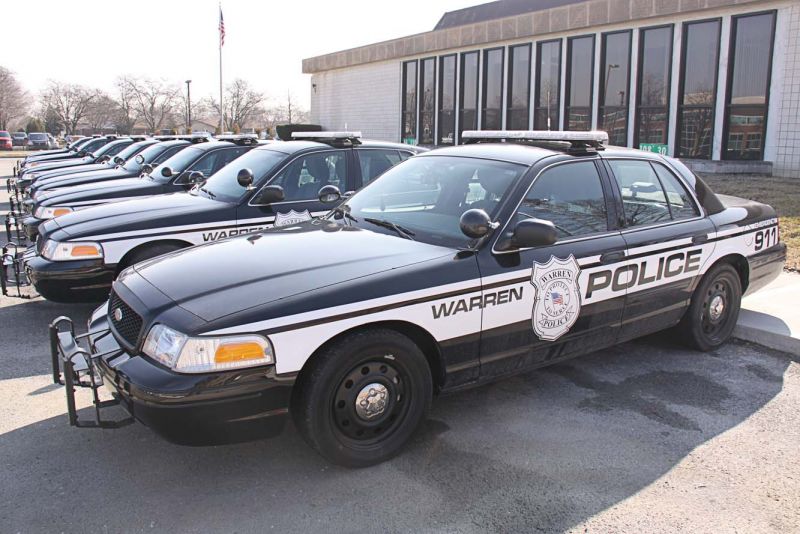
Many of our blogs explore criminal and drunk driving issues within the realm of our law firm's expertise. Others are about the Courts where we frequently practice law. This blog is about the 37th District Court where we regularly provide legal services to our clients who are charged with traffic offenses, criminal (felony or misdemeanor) and OWI cases arising out of Warren and Centerline.

The 37th District Court has two locations which are located in the cities of Centerline and Warren. (MAP OF WARREN) The jurisdictional boundaries of these Courts covers 36 square (from 8 Mile Road to 14 Mile Road and from Hayes to Dequindre). South of 8 Mile Road is the City of Detroit and West of Dequindre is the County of Oakland. Within the boundaries of the 37th District Court are major Macomb County roads, the I-696 expressway, industrial centers, General Motors Tech Center, Automobile Dealers, over 100 restaurants and retail establishments.

The Warren Police Department (WPD) is located directly behind the 37th District Court. The WPD is one of the most active law enforcement agencies in Macomb County with a major detective bureau, air force (helicopter) motorcycle and traffic patrol squad. The detective bureau has a drug enforcement team as well as other units which engage in various undercover operations including cracking down on prostitution. The Michigan State Police also have a presence in Warren as the law enforcement entity responsible for patrolling I-696 expressway.

Our firm has represented clients charged with just about every imaginable misdemeanor and/or felony crime in the 37th District Court including drunk driving (OWI), drug crimes, disorderly conduct, prostitution, offer to engage or solicit sex from another, domestic assault, assault crimes, retail fraud, larceny, fraud, breaking and entering, child abuse, criminal sexual conduct, indecent exposure, malicious destruction of property, traffic violations, DWLS and probation violations.

As experienced criminal defense attorneys in Macomb County, I can say that the 37th District Court is a just and fair place to practice law. What I mean is that Judges are willing to listen to arguments and fairly dispose of criminal, drunk driving and traffic cases. I have found that the Judges are willing to give a criminal defense attorney some leeway when a case goes to trial or preliminary examination. In addition, most criminal cases handled by our firm are resolved without trial (90% or more are resolved by aggressive plea negotiations).

Criminal Cases in the 37th District Court

We set various goals when a client is charged with a criminal or drunk driving offense. Avoidance of a criminal conviction and jail are on the top of our list of goals. Some of our success stories include reducing a felony to a misdemeanor or having a case taken under advisement with a dismissal after a period of probation and compliance with the Court's conditions. We have utilized every special provision of law in the 37th District Court to obtain dismissals of retail fraud, domestic violence, possession of drugs/marijuana, MIP and many other criminal offenses. The Court will also consider petitions to have youthful offenders (age 17 but under age 21) placed on a special status where the public record will be sealed and the offense dismissed for eligible offenders.

Drunk Driving Cases in the 37th District Court

I have found the Judges in the 37th District Court to take some mercy on first offenders whether they are charged with a criminal offense or drunk driving (OWI). Drunk driving cases rarely get dismissed. However, by aggressively defending our clients, an OWI charge can often be reduced to a lesser offense which will save a client money, points and driver responsibility fees. I have represented two (2) clients in July 2012 who had BAC (Blood Alcohol Content) results of .17% or greater. In both cases, I was able to have the charges reduced to impaired driving. (A chemical test result of .17% or greater is known as a "Super Drunk" case and the policy is usually against any reduction in the charge).

Traffic Violations in the 37th District Court

When resolving a traffic matter in the 37th District Court, we are often able to have traffic tickets amended and avoid points. A traffic ticket can be reduced to a Michigan civil infraction known as "impeding traffic" which does not appear on a person's driving record and does not carry any points.

We take every precaution to know the strengths and weaknesses of our cases, set realistic goals and formulate strategies to achieve favorable results. In doing so, we will obtain discovery (police reports, videos, test results), witness statements and make recommendations to our clients for counseling whenever this is an appropriate course of action.

37th District Court Locations:

Warren: 8300 Common Road, Warren, MI 48093 Phone: 586-574-4910

Centerline: 7070 East 10 Mile Road, Centerline, MI 48015, Phone: 586-757-8333

37th District Court Presiding Judges:

John Chmura, Matthew Sabaugh, Jennifer Faunce, Dawn Gruenburg

Soon, Judge Dawn Gruenburg will be leaving the 37th District Court for a Federal Judicial Appointment. She will be dearly missed. Her replacement will be appointed by Governor Rick Snyder. Our firm has sent letters to Governor Snyder in favor of qualified candidates.


The Nautical Mile in St. Clair Shores, a Metro Detroit Landmark

May 26, 2012,

nautical mile marinas.jpg
The Nautical Mile is located on Jefferson between 9 Mile Road and 10 Mile Road in the City of St. Clair Shores. The Nautical Mile is a Michigan landmark which consists of numerous restaurants, marinas and boat dealers along a one mile stretch of land along the Lake St. Clair shoreline. It is a major Metro Detroit area attraction and is well known for nightlife, dining, water sports, boating or just cruising on Jefferson Avenue.

In 2010, Michigan claimed third place among the 50 states with total boat registrations boasting 812,066 boats and watercraft. Florida and Minnesota rank above Michigan while California trails Michigan in the total number of registrations. The marinas located in St. Clair Shores, along with other Macomb County Marinas located in Mt. Clemens, Harrison Township and New Baltimore, claim a major share of these registrations. The major marinas consist of Miller Marina, Jefferson Beach Marina and Emerald City Harbor.

The locally popular restaurants along the Nautical Mile (Brownies, Pat O'Brien's, The Beach Grill, Waves) offer excellent culinary options and popular night spots. This combined with the marina and boating activity are a recipe for a summer long party atmosphere.

Alcohol is a close cousin of the boating scene which can lead to numerous criminal offenses. Our firm has represented individuals charged with drunk driving (OWI), boating under the influence (BUI), assault crimes, disorderly conduct, resisting arrest, public intoxication, MIP and domestic violence for various behavior on the waterfront. Whether on sea or shore, many of the confrontations with the police on the Nautical Mile are associated with alcohol consumption and/or drug use which can lead to misdemeanor or felony criminal violations.

The 40th District Court, located in St. Clair Shores, sees a fair share of cases associated with criminal activity along the Nautical Mile. I can say that the Judges of the 40th District Court are knowledgeable, proactive and reasonable when it comes to alcohol related crimes in their jurisdiction. Like other Judges in Macomb and Oakland County, the 40th District Court bench will give most first offenders a chance to dig out. The Judges in this Court are receptive to statutes which allow for deferrals and dismissals upon compliance. In this regard, our firm has negotiated and achieved special sentencing dispositions resulting in dismissals of drug crimes, domestic violence, disorderly conduct, MIP and other criminal offenses involving adults or youthful offenders pursuant to the Youthful Trainee Act (HYTA). Drunk driving cases are not so easily resolved but are often reduced to a lower offense which does not result in loss of license or jail time if handled properly. Clients facing a repeat criminal offense, violent crime, narcotic crime or property destruction will need a serious defense strategy.

A person who commits an alcohol related crime can expect probation along with random alcohol testing to insure compliance. The 40th District Court has its own probation department and I can say that they will set up a probation violation hearing upon notice of non-compliance or an alcohol/drug test failure. The 40th District Court is located on the corner of 11 Mile Road and Jefferson: 27701 Jefferson, St. Clair Shores, Michigan 48081; Honorable Mark A. Fratarcangeli and Honorable Joseph Craigen Oster presiding, Phone: 586-445-5280, criminal extension #3.

Continue reading "The Nautical Mile in St. Clair Shores, a Metro Detroit Landmark" »

St. Clair County; An International Border to Protect, Miles of Shoreline and Major Summer Events

May 18, 2012,

blue water bridge 2.jpg
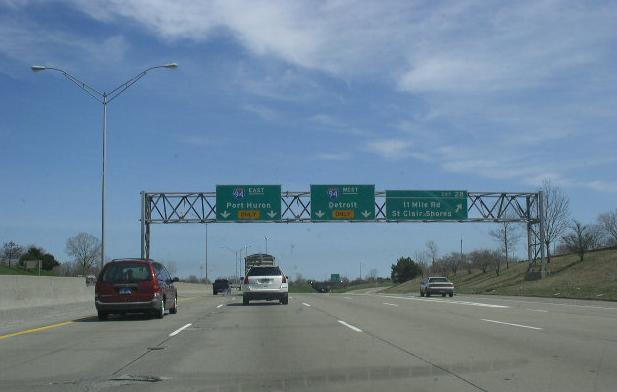
St. Clair County is located in the south eastern part of the thumb area of Michigan. It is the gateway county to the northern thumb and the Great lakes. It is known as the Blue Water Area. St. Clair County borders Macomb, Lapeer and Sanilac Counties and is just a short distance (across the Port Huron River via the Blue Water Bridge) from Sarnia, Ontario, Canada. The Blue Water Bridge is a major international crossing from Canada into the United States. Interstate expressway I-94 runs north and south through St. Clair County, I -69 runs east and west and ends in the City of Port Huron. M-29 is the highway that is located on the eastern shoreline of St. Clair County which takes you in and around the St. Clair River and Anchor Bay. Map of St. Clair County Link.

The eastern side of St. Clair County consists of shoreline on the St. Clair River, Lake Huron, Anchor Bay and Lake St. Clair. The major cities which border these bodies of water are Port Huron (the county seat), St. Clair, Marine City and Algonac. One can enjoy views on the river (freighters, Canada) in any of the cities along these shoreline cities.

Click this link for a live web-cam of the Port Huron River and the Blue Water Bridge.

Recreational attractions in this area include boating, hunting and fishing. The City of St. Clair would be my top pick for dining (Charly's River Crab, St. Clair Inn) or enjoying the charm of a small town with a large park area dedicated along the river. In 2012, more than 50,000 visitors are expected to attend the Blue Water Fest which occurs just prior to the Port Huron to Mackinac Race.

St. Clair County is well guarded and policed because of its international border with Canada and heavy recreational traffic. The courts in St. Clair County see a fair amount of cases associated with recreation violations, DNR violations, border crossing issues (on both the US and Canada side) and drunk driving cases. A drive along the winding highway of M-29 which meanders along the St. Clair River is not a place to be if you have had any alcohol or drugs. In some places, the road is only a matter of feet from the water. Unfortunately, a fair share of accidents and OWI cases occur on this road.

A traffic violation, drunk driving or criminal case (such as domestic violence, disorderly conduct, boating under the influence, drug crimes) in St. Clair County will wind up in the 72nd District Court in either Port Huron or Marine City:

72nd District Court (Port Huron)
201 McMorran Blvd.
Room 2900
Port Huron MI 48060

72nd District Court (Marine City)
2088 South Parker (M-29)
Marine City, MI 48039

The courts and law enforcement officers in St. Clair County tend to be protective of their communities. They have the responsibility of keeping order in an area which has an international border and hosts recreational activities which often involve alcohol. (Jobbie Nooner). Our experience in these courts has been positive. I find the Judges to be reasonable when it comes to first time offenders of criminal acts such as drunk driving, disorderly conduct or simple drug possession charges. Often, such an offender is looking at probation. If the offense involves a first time drug charge or the offender is age 17 but under age 21, a dismissal is possible special Michigan statutes (HYTA and MCL 333.7411).

Continue reading "St. Clair County; An International Border to Protect, Miles of Shoreline and Major Summer Events " »

Operating Under the Influence in Michigan: The 'Koon' Decision a Reminder of 'Zero Tolerance" Approach to Drugs and Driving

May 3, 2012,

www.abdolaw.com.jpgThe recent Court of Appeals case, People v. Koon (which can be read in its entirety here), illustrates how Michigan deals with drugged driving. Oftentimes clients are under the misguided impression that a prescription or a medical marijuana card offers them immunity from prosecution for operating a vehicle while intoxicated. However, Michigan law has two provisions to deal with this. For Schedule 1 narcotics (cocaine, heroin, ecstasy, for example) where there is 'any amount' of the illicit substance the driver can be convicted. Alternatively, impairment must be proven where a client is charged with driving under the influence of a prescribed medication.

The Koon case deals with 3 issues; 1) the 'any amount' provision of MCL 257.625(8); 2) Michigan's Medical Marijuana Act; and 3) marijuana that was ingested hours before the defendant operated the automobile. In this instance, the defendant had a medical marijuana card and had used marijuana five to six hours before driving his automobile. Nonetheless, marijuana's active ingredient THC, which can remain in one's system for weeks after it's ingested, showed up in Mr. Koon's blood. Both the District Court and Circuit Court held that the Medical Marijuana Act was a defense to the zero tolerance law. Unfortunate for Mr. Koon and other card holders, the Court of Appeals did not.

The opinion, which I recommend those visiting this blog take the time read (it's not too complicated), reasons that the Michigan Medical Marijuana Act does not carve out an exception to the 'any presence' law. The MMMA does not reschedule marijuana (it remains Schedule 1) and further specifically states there are no protections for those driving under the influence of marijuana. The issue may be taken up with the State Supreme Court in the future.

What are the takeaways from this case? Most specifically as it pertains to marijuana card holders, they remain at risk driving long after they ingest marijuana. The result does seem harsh given that THC can remain in one's system for weeks after it is initially used. Nonetheless, this seems to shed some light on the way Courts are interpreting that law. Further, this should serve as a reminder that the State does not take lightly to drugged driving. If you are being prosecuted for operating an automobile under the influence of any drug, a marijuana card or a valid prescription does not offer blanket protection. This is likely an issue that will continue to take shape in the Legislature and Court of Appeals over the coming years.

Continue reading "Operating Under the Influence in Michigan: The 'Koon' Decision a Reminder of 'Zero Tolerance" Approach to Drugs and Driving" »

Addressing Special Concerns of Selfridge Air National Guard Reserves and Personnel Charged With Criminal Offenses

April 26, 2012,

Jet.jpg

Selfridge Air National Guard Base (SANG) is one of the oldest military air fields in the United States. It is located in the Township of Harrison, County of Macomb and is situated on prime Lake St. Clair property. Approximately 6000 air and army national guard, as well as civilian employees, are employed and/or housed at the SANG base. There are numerous units assigned to SANG including the 127th Wing (Michigan Air National Guard), customs and border protection and the Coast Guard.

There are many SANG military personnel who are married, live on or off base, and are residents of a state other than Michigan. Our attorneys have represented SANG military personnel for numerous legal matters including drinking offenses (drinking and driving), domestic violence, assault crimes, drug crimes and retail fraud (shoplifting). Anyone in the military who is charged with a criminal offense faces special circumstances which we are prepared to defend. We understand that when a military person (reserved or enlisted) gets into trouble, he or she faces possible rank demotion, loss of security clearance and/or dishonorable discharge from military service upon conviction for a criminal offense.

When a military person becomes a client of our firm, we are aware of their special needs and potential consequences. Certain convictions may be detrimental to a military career. There are other ramifications such as travel restrictions and possible incarceration. When a drinking a driving (DUI or OWI) is charged, the issue may be less compelling and only involve the driver license sanctions for a non-resident. Our job is to identify the needs of our military clients and address these particular needs and concerns. For example, a recent client who was charged with domestic violence needed permission to travel out of the state and the country. The case was resolved favorably whereby the case will be deferred and dismissed after a period of probation. The Judge also granted permission for our client to travel out of state and out of the county.

Upon being retained, we ask our military clients to obtain documentation and references which may include:

  • Civilian and Military Achievements, Medals, Deployments
  • Letters of Recommendation
  • Counseling Report
  • Deployment Orders

Our goal is always to avoid a conviction or seek a result that will not jeopardize our client's future with the military. Our results include cases which are dismissed, reduced or dismissed after a period of advisement. Unfortunately, drinking and driving cases are rarely dismissed outright. However, we are usually able to have the charges reduced, avoid jail and obtain permission to travel upon transfer or deployment.

Our firm approaches criminal cases involving military personnel quietly, discreetly and with diplomacy. Fortunately, I have found the prosecutor's, law enforcement and the courts in Macomb County to be sensitive to those that are serving their country.

DUI - DRUGS: Operating While Under the Influence, Intoxicated or Impaired Due to Analogue Drugs: Same Penalties as Drunk Driving

December 5, 2011,

imagesCAA4TL1H.jpg

Driving under the influence of alcohol can be ascertained by measuring a person's blood alcohol content (BAC). If a person's BAC is .08% or greater, he or she is considered to be "per se" or legally intoxicated. If the BAC is .17% or greater, the person may be charged as a "super drunk" pursuant to Michigan law making it a more severe crime for having a high blood alcohol content.

On the other hand, driving under the influence of prescribed drugs is not a per se or strict liability offense and must be proven by the testimony of the police officer regarding the conduct of the accused. In this regard, the police will obtain a blood sample to determine the presence and level of analogue(s) and/or other substances. In many cases, the person may have mixed the prescribed analogue drugs with one or more alcoholic beverages or marijuana. In addition, the police will assess a driver's ability to perform field sobriety tests (FST) which are designed to test a driver's balance and motor skills. Police may ask a driver to perform tasks such as walking heel-to-toe in a straight line, standing on one leg, or reciting the alphabet backwards.

A valid prescription is not a defense for someone who operates a vehicle while impaired or under the influence of analogue drugs (OUID). However, a prescription coupled with evidence of a person's sober conduct and driving ability can be presented as a defense.

A person convicted of operating a vehicle while intoxicated due to analogues (OUID) or alcohol (OWI) faces the same penalties under Michigan laws. For a first offense of OUID, the maximum penalties are:

  • 6 Points
  • License suspense for 180 days with restrictions after 30 days
  • Driver Responsibility Fee of $1,000.00 per year for 2 years
  • Maximum Fine of $500.00, plus court costs
  • Probation for up to 2 years
  • Up to 360 hours of community service
  • Vehicle Immobilization for up to 180 days
  • Up to 93 days in Jail
  • Mandatory Substance Abuse Evaluation
  • Possible Substance Abuse Counseling and Random Testing

Defending Operating While Intoxicated - Analogues, Prescribed Medications

There may be legal grounds for a dismissal or reduction to careless driving on the basis that the medications were taken as prescribed and did not cause the individual to be impaired or under the influence. A person who has taken medications as prescribed may defend the charge on the basis that the medications did not diminish his or her ability to operate a motor vehicle. In such cases, an aggressive defense attorney will obtain the police reports, video of the traffic stop and gather witness statements of those that could testify as to the behavior and sobriety of the accused during the time frame prior to the traffic stop. In addition, A charge for operating under the influence of drugs (OUID) may be plea bargained to the lower charge of operating while impaired which involves lesser penalties.

Continue reading "DUI - DRUGS: Operating While Under the Influence, Intoxicated or Impaired Due to Analogue Drugs: Same Penalties as Drunk Driving" »

Illegal Possession of Analogue Drugs In Michigan

December 5, 2011,

images[9].jpg

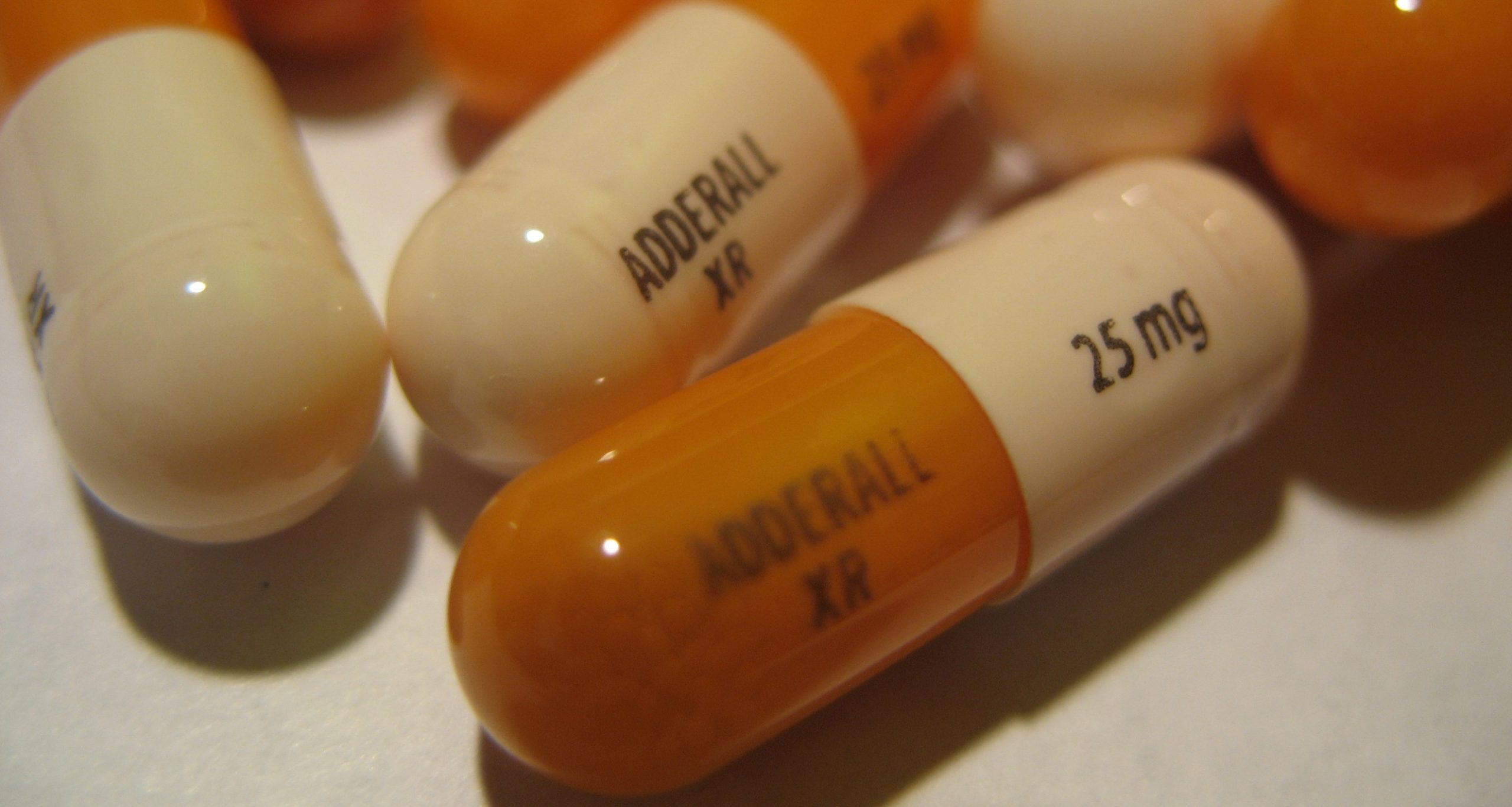
Analogue drugs are also known as designer drugs and are illegal in Michigan without a valid prescription. According the United States Code (21 USC 802) a controlled substance "analogue" means a substance which is substantially similar to the chemical structure of a schedule 1 or 2 controlled substance and has a stimulant, depressant, or hallucinogenic effect on the central nervous system that is substantially similar to or greater than the stimulant, depressant, or hallucinogenic effect on the central nervous system of a controlled substance in schedule I or II. Click here for an extensive list of analogue drugs.

Defenses to Drug Crimes: Lack of Possession or Knowledge

The issue of "possession" is often contested by a person charged with a drug crime. A person need not have actual physical possession of a controlled substance to be guilty of possessing it. An experienced drug crime lawyer can advise a person charged with a drug crime as to possible defenses which may include:

  • Illegal Search and Seizure
  • Mere Presence at a place where drugs are present
  • Lack of Knowledge
  • Innocent Spouse or Passenger in Vehicle

Possession of Analogues: Possible Dismissal Pursuant to Michigan Law

In Michigan, possession of analogues is a felony which can be punished by up to 2 years in prison and a fine of up to $2,000.00, or both. Our firm represents a fair share of clients who are arrested or searched where the police find analogues, such as Vicodin, in their possession at the time of arrest. Surprising, many of these clients can verify a past medical condition or prior prescription necessitating medication such as pain pills. However, a person may continue to take the medication long after the medical condition is resolved. Unless a current prescription is available, the police will charge the person with illegal possession of analogues. While old medical records and prescriptions are useful in our negotiations, in most cases they will not support an outright dismissal. In addition, it is not a defense to produce a third person's prescription since you only have the right to possess your own medications!

Fortunately, a person charged with possession of analogues in Macomb County, as well as all Michigan district and circuit courts, may be eligible to have the case resolved pursuant to MCL 333.7411. This provision, also known as 7411, enables a first time drug offender to have an offense deferred and dismissed upon completion of probation. An experienced criminal defense attorney will know how to negotiate a 7411 plea bargain with the prosecutor and assertively advocate for the plea bargain to be accepted by the Court. A person with a prior drug crime or who has used in 7411 is not eligible for this deal.

Continue reading "Illegal Possession of Analogue Drugs In Michigan" »

Does Michigan Medical Marijuana Law Conflict With Law Which Prohibits Driving With the Presence of Certain Drugs?

April 3, 2011,

You can smoke marijuana now with a Michigan Medical Marijuana card. However, the Michigan Motor Vehicle Code prohibits operation of a vehicle with the presence of a marijuana or other schedule 1 substances.

This conflicting issue was recently reported in an article in The Oakland Press.
A recent article in the Oakland Press, Medical marijuana advocates: State has us in a 'Catch 22', pertains to a case out of Grand Traverse County where a medical marijuana cardholder was charged with Operating With the Presence of Drugs (OWPD). The Grand Traverse County Prosecutor has filed an appeal and the Michigan Attorney General, Bill Shuette, has filed a brief, both supporting the law which prohibits operation of a vehicle with the presence of marijuana. Medical marijuana advocates say that Michigan's zero tolerance policy is a "Catch 22" because you are allowed to use marijuana as a medical marijuana patient but you are not allowed to drive.

Michigan's existing law which makes it illegal to Operate a Vehicle with the Presence of Drugs (OWPD) only requires the prosecutor to show some presence of certain drugs (schedule 1) or marijuana in a person's chemical test (usually a blood test) to obtain a conviction. The prosecutor is not required to prove that the driver was intoxicated or impaired, only that the person had the presence of drugs, or marijuana, in his system at the time of operating a vehicle. This has been labeled a "zero tolerance" law. Similarly in Michigan, the issue of intoxication is irrelevant if someone is found operating a vehicle with a blood alcohol content of .08% or greater (OWI).

The active ingredient of marijuana is Tetrahydrocannabinol (THC or delta 9). The system metabolizes THC into numerous metabolites which are stored in human body fat. These metabolites show up in urine tests for several days, approximately 12-30, after the effects of marijuana have disappeared. Medical marijuana advocates and criminal defense lawyers argue that the mere presence of these metabolites does not equate to intoxication or impairment.

The Michigan Court of Appeals will need to consider whether intoxication or impairment will need to be proven in cases where someone has used medicinal marijuana or whether the existing law will be upheld as mentioned above.

Continue reading "Does Michigan Medical Marijuana Law Conflict With Law Which Prohibits Driving With the Presence of Certain Drugs?" »