Tired Explanations Part 1: Cough Syrup, Second Hand Marijuana Smoke, and Other Excuses That Don't Hold Up In Court

January 20, 2012,

cough-syrup1.jpg
If you spend enough time in the back of a court room you will hear a few common explanations for positive drug and alcohol tests. Often when faced with a probation violation (or show cause while on bond, or if you are appealing to get your license back) defendants/petitioners will attempt to offer an innocent reason for their positive test. What defendants often do not know, that practicing attorneys do, is that Judges have heard it all. While our strategy varies from case to case - we advise that our clients NEVER* to use the following explanations when standing in judgment. Probation violation hearings are oftentimes much more serious than the underlying charge, as the Court will view the defendant as somebody who has been unable to prove themselves. Further, the sentencing Judge has the authority to sentence defendants to the maximum term of incarceration for the underlying charge. Beneath are some common excuses that come up in court. I've done some basic research into each of these explanations to see if they are at all supported by science, unfortunately it seems that they are not.

Excuse #1: 'It Was Secondhand Marijuana Smoke'

When defendants test positive for THC they will sometimes tell the Judge that it was merely secondhand smoke. The Wikipedia page on drug tests (which has a wealth of other relevant information) states that "[t]his legend is technically true but highly misleading." In order for a test to be positive from secondhand smoke one would have to be in a small unventilated space for hours with marijuana smokers. Based on this, it seems that somebody who is by marijuana smoke for a short amount of time would not have THC levels to yield a positive test. The possibility of a positive test aside, Judges hear this excuse all of the time and know it is just that. Dishonesty will always put you in a worse position than where you started.

Excuse #2: 'The Cocaine Seeped Through My Skin'

Though a somewhat more isolated excuse, this still comes up time and time again. Karch's Pathology of Drug Abuse indicates that a positive drug test from this type of exposure is unlikely unless dealing with a large quantity of cocaine. No surprise that Judges do not buy into this explanation. Beyond the fact that it most likely isn't true, there isn't a solid legal reason to be handling a large quantity of cocaine. As advised above, this is a defense that will get you nowhere and if anything will set you back should you use it before a Judge.

Excuse #3: 'I Was Drinking Cough Syrup'

Perhaps the most common of all of the excuses, when defendants test positive for alcohol they often say that it is from drinking cough syrup. I couldn't figure out the exact amount, but alcohol is listed as an inactive ingredient in Nyquil. Some sources stated as low as 10% and some as high as 25%. Nyquil can cause a positive alcohol test. However, it would seem that one would need to drink a large quantity to have a positive BAC or drink cough syrup immediately before blowing. MOST OF THE TIME, this excuse does not hold up. Oftentimes Judges see through this smoke screen and view the defendant as being dishonest and uncooperative. Further, a term of probation is typically no consumption of alcohol, because there is alcohol in some cough syrup this is a straightforward violation. HOWEVER, in some instances (specifically in license appeals at the DLAD) we have been successful in bringing this defense where there is corroborating evidence and/or a doctor's note.

Continue reading "Tired Explanations Part 1: Cough Syrup, Second Hand Marijuana Smoke, and Other Excuses That Don't Hold Up In Court" »

Federal Criminal Cases In Michigan

January 4, 2012,

fbi-4-30-09[1].jpg

In the United States, there are crimes which may be prosecuted at the State level based upon violations of State laws. A Federal crime is one which involves a violation of a Federal law. Many criminal offenses may fall under the jurisdiction of both the State and Federal laws and either or both branches of government may prosecute. The doctrine of double jeopardy does not preclude both State and Federal prosecutions under the doctrine of dual sovereignty.

There are literally thousands of Federal laws. Many Federal crimes are listed in Title 18 of the United States Code. In addition, there are several Federal agencies with authority to investigate Federal offenses including: Federal Bureau of Investigations (FBI), Drug Enforcement Agency (DEA), Alcohol Tobacco and Firearms (ATF), United States Marshal Service (USMC), United States Secret Service, Immigration and Customs Enforcement, United States Postal Inspection Service and Homeland Security. Postal Inspectors investigate any crime in which the U.S. Mail is used to further a crime by use of the mail, telephone, or on the Internet (mailfraud).

In Michigan,United States Districts Courts (Federal courts) are located in Detroit (Eastern District), Lansing, Grand Rapids, Ann Arbor, Port Huron, Flint and the upper peninsula. Federal criminal defense attorneys are required to adhere to the Federal Court Rules. The formalities, procedure, sentence guidelines and process of the Federal courts are inherently stricter than the State courts. All of this means that anyone faced with a Federal criminal investigation or Federal criminal charge(s) should retain a qualified Federal criminal defense lawyer.

If you are contacted by any Federal law enforcement agency concerning an investigation, you should immediately consult with an attorney. The Federal criminal justice system is fraught with legal traps. As soon as you talk, you may face an indictment for lying to a Federal agent which can carry 5 years in prison. It is always best to obtain the business card of the agent or obtain a name and telephone number.

It is serious business when our law firm receives a call from a client who is the subject of a Federal investigation or is indicted for a Federal crime. A Federal search warrant will almost always result in the seizure of documents, financial records and computers. An arrest may occur at the same time of the search. However, criminal charges (indictment) may not occur for many months (or even years) after a criminal investigation or search and seizure. During the pendency of a Federal case, a criminal defense attorney will explore all possible options with the United States Attorney/USA (Prosecutor) including cooperation, plea agreements (Rule 11) and trial.

Federal crimes may necessitate the need for a criminal lawyer that specializes. Federal crimes include but are not limited to the following: mail fraud, tax fraud, drug crimes, internet crimes, federal sex crimes (use of the internet), gambling crimes, bank/financial crimes, Medicaid fraud, racketeering, money laundering, computer fraud, pollution, crimes upon waterways or upon federal property and identity theft. At our firm, we are associated with Federal criminal lawyers throughout Michigan. In addition, we can arrange for legal representation by experienced and qualified Federal criminal attorneys anywhere in the United States of America in all areas of specialty.

Operating While Intoxicated in Westland, What to Expect in the 18th District Court

December 14, 2011,

Westland District.jpgThe intention of this post is to give you a brief overview of what to expect if you are being charged with Operating While Intoxicated (OWI) arising out of the 18th District Court in the City of Westland. The 18th District Court is presided over by the Honorable Judges Sandra Ference Cicirelli and Mark A. McConnell. Based on our firm's experience, the 18th District Court will treat you fairly and your case will be handled efficiently. By treated "fairly", we mean that if you are a first offender whose OWI is reduced to the lower offense of Operating While Visibly Impaired (OWVI), the Court's sentence will be reasonable as I will explain. When I say that a first offense will be handled "efficiently", we mean that your case can be handled in 1 court appearance if it is resolved by way of plea bargaining under certain circumstances. However, if motions are filed or your case is scheduled for trial, there will be other necessary proceedings. This blog will focus on the vast majority of cases which are resolved by way of a plea bargain.

When charged with a crime, our firm will consider all of the evidence and make recommendations to our clients as to the best course of action. In reality, the vast majority of criminal offenses and drunk driving cases are resolved by means of plea bargaining. When representing a client charged with an OWI who does not have a good case for trial, our law firm typically has three goals;

-Get the charge reduced, typically to an "Operating While Visibly Impaired" (colloquially referred to as an "OWVI" or simply an "Impaired");

-Avoid jail time; and

-Minimize the length, terms and conditions of probation.

Discussed in other blog posts, most drunk driving cases do not make great cases for trial. Presumptive evidence of intoxication is established by a valid traffic stop, failed roadside sobriety tests, and Blood Alcohol Content (BAC) results of .08% or greater. For that reason, we usually fight to secure the lesser charge of Impaired Driving and seek recommendations from the prosecuting authority for sentence leniency. The merits of the Impaired Driving charge have also been discussed at length in our previous blog posts. Generally, an OWI which is reduced to OWVI is less points, saves our clients $1,000.00 in driver responsibility fees, involves a shorter period of action against one's license and does not involve any mandatory period of license suspension before issuance of a restricted license.

In most other courts, the process to resolve a drinking and driving offense requires at least 3 court appearances which include pretrial conference, substance abuse assessment and sentencing. However, the 18th District Court will endeavor to handle the entire case on the same date. It is our experience that getting to the 18th District Court by 8:00 a.m., knowing our Client's case and being prepared to advocate with the prosecutor are essential for a case to be resolved in the efficient manner which I have described compared to cases which languish for several months and require multiple stressful Court appearances.

At the time of sentencing, the Court will determine the extent and terms of probation along with fines and costs. The maximum term of probation for a first offense Impaired Driving is 2 years. In our experience, first time offenders for Impaired Driving should expect 12 months probation in the 18th District Court. Probation may be reporting (to a probation officer) or non-reporting. Non-reporting probation is preferred and is less intrusive upon one's daily routine. The 18th District Court will normally allow time to pay fines and costs. However, in a recent case handled by our firm, the Court said that our client's reporting probation will be converted to non-reporting probation after payment of fines and costs.


Continue reading "Operating While Intoxicated in Westland, What to Expect in the 18th District Court" »

December at Our Law Office and Holiday Crimes: Retail Fraud, Drunk Driving and Domestic Violence

December 6, 2011,

imagesCAZNYLHX.jpg

Well, December has never been a month where business is slow at the shopping malls or at our law firm. December is the month when people get out of their routine. What I mean is that many tend to drink more, spend more money, drive more frequently and have greater periods of time with family members. Existing drinking problems, substance abuse, depression, strained relationships and financial troubles are put to the test during the holiday season. All of these situations can lead to criminal problems such as drunk driving, retail fraud and domestic violence.

As a Macomb County criminal defense lawyer, I consider myself sensitive to the needs of our clients during the holidays. What can you say when someone gets charged with retail fraud (shoplifting) who has no employment or suffers from depression? While I do not condone criminal activity, I am just saying that people are people and I do not sit in judgment of those who are less fortunate or troubled. I have found that the Judges in Macomb County to be reasonable with those who have no criminal record but find themselves charged with retail fraud under various circumstances including financial hardship. In these cases, our attorneys are able to negotiate a plea bargain to have the case dismissed after a period of probation and conditions which may mean attending an economic crime class. This is true for clients that we have represented throughout Macomb County.

The holiday season is also a time of parties and gatherings which invariably involve alcohol. I have represented my share of teatotallers and social drinkers who have one too many at a holiday house party and wind up being charged with drunk driving. This can happen to anyone who has a few drinks and gets stopped by the police a few blocks from home. I cannot count the number of clients that I have represented for drunk driving who are pulled over in their own subdivision or even while pulling up in their own driveway. In Michigan, a person is considered legally drunk if his blood alcohol content (BAC) is .08% or greater regardless as to whether or not the person was actually intoxicated. To make matters worse, Michigan has passed a super drunk law making it a more serious crime if the blood alcohol content is .17% or greater. Sobriety is not a defense to a charge of Operating While Intoxicated (OWI or DUI) or Super Drunk. Various drink/weight index charts provide an approximate blood alcohol content (BAC) which can be helpful for anyone considering a few drinks before driving. The best advice that I can give is to have NONE FOR THE ROAD since the BAC charts are only an approximation and do not take individual tolerances into consideration; Even one drink can create misunderstandings in the eyes of the law if an accident occurs and someone is injured or dies.

Lastly, our attorneys see a fair amount of domestic violence cases during the holidays. Again, too much togetherness with the family and awkward social gatherings may be outside of the comfort zone. Emotions run high and money worries, existing depression along with substance abuse can come full circle which sometimes leads to arguing, fighting or domestic violence. A person who is charged with domestic violence may be removed from the home (no-contact order) and be unable to spend the holidays with family. The need for family counseling and a lawyer could not be greater under these circumstances. Our attorneys will try to schedule an expedited hearing with the Court to remove the no-contact order whenever possible. Removal of the no-contact order will require the consent of the spouse. In addition, our firm has had numerous domestic violence charges dismissed under a special provision of Michigan's domestic violence laws.

All of the above situations can occur anytime of the year. At our firm, we never pass judgment on anyone and welcome the opportunity to provide guidance to our clients faced with personal and legal problems.

DUI - DRUGS: Operating While Under the Influence, Intoxicated or Impaired Due to Analogue Drugs: Same Penalties as Drunk Driving

December 5, 2011,

imagesCAA4TL1H.jpg

Driving under the influence of alcohol can be ascertained by measuring a person's blood alcohol content (BAC). If a person's BAC is .08% or greater, he or she is considered to be "per se" or legally intoxicated. If the BAC is .17% or greater, the person may be charged as a "super drunk" pursuant to Michigan law making it a more severe crime for having a high blood alcohol content.

On the other hand, driving under the influence of prescribed drugs is not a per se or strict liability offense and must be proven by the testimony of the police officer regarding the conduct of the accused. In this regard, the police will obtain a blood sample to determine the presence and level of analogue(s) and/or other substances. In many cases, the person may have mixed the prescribed analogue drugs with one or more alcoholic beverages or marijuana. In addition, the police will assess a driver's ability to perform field sobriety tests (FST) which are designed to test a driver's balance and motor skills. Police may ask a driver to perform tasks such as walking heel-to-toe in a straight line, standing on one leg, or reciting the alphabet backwards.

A valid prescription is not a defense for someone who operates a vehicle while impaired or under the influence of analogue drugs (OUID). However, a prescription coupled with evidence of a person's sober conduct and driving ability can be presented as a defense.

A person convicted of operating a vehicle while intoxicated due to analogues (OUID) or alcohol (OWI) faces the same penalties under Michigan laws. For a first offense of OUID, the maximum penalties are:

  • 6 Points
  • License suspense for 180 days with restrictions after 30 days
  • Driver Responsibility Fee of $1,000.00 per year for 2 years
  • Maximum Fine of $500.00, plus court costs
  • Probation for up to 2 years
  • Up to 360 hours of community service
  • Vehicle Immobilization for up to 180 days
  • Up to 93 days in Jail
  • Mandatory Substance Abuse Evaluation
  • Possible Substance Abuse Counseling and Random Testing

Defending Operating While Intoxicated - Analogues, Prescribed Medications

There may be legal grounds for a dismissal or reduction to careless driving on the basis that the medications were taken as prescribed and did not cause the individual to be impaired or under the influence. A person who has taken medications as prescribed may defend the charge on the basis that the medications did not diminish his or her ability to operate a motor vehicle. In such cases, an aggressive defense attorney will obtain the police reports, video of the traffic stop and gather witness statements of those that could testify as to the behavior and sobriety of the accused during the time frame prior to the traffic stop. In addition, A charge for operating under the influence of drugs (OUID) may be plea bargained to the lower charge of operating while impaired which involves lesser penalties.

Continue reading "DUI - DRUGS: Operating While Under the Influence, Intoxicated or Impaired Due to Analogue Drugs: Same Penalties as Drunk Driving" »

Illegal Possession of Analogue Drugs In Michigan

December 5, 2011,

images[9].jpg

Analogue drugs are also known as designer drugs and are illegal in Michigan without a valid prescription. According the United States Code (21 USC 802) a controlled substance "analogue" means a substance which is substantially similar to the chemical structure of a schedule 1 or 2 controlled substance and has a stimulant, depressant, or hallucinogenic effect on the central nervous system that is substantially similar to or greater than the stimulant, depressant, or hallucinogenic effect on the central nervous system of a controlled substance in schedule I or II. Click here for an extensive list of analogue drugs.

Defenses to Drug Crimes: Lack of Possession or Knowledge

The issue of "possession" is often contested by a person charged with a drug crime. A person need not have actual physical possession of a controlled substance to be guilty of possessing it. An experienced drug crime lawyer can advise a person charged with a drug crime as to possible defenses which may include:

  • Illegal Search and Seizure
  • Mere Presence at a place where drugs are present
  • Lack of Knowledge
  • Innocent Spouse or Passenger in Vehicle

Possession of Analogues: Possible Dismissal Pursuant to Michigan Law

In Michigan, possession of analogues is a felony which can be punished by up to 2 years in prison and a fine of up to $2,000.00, or both. Our firm represents a fair share of clients who are arrested or searched where the police find analogues, such as Vicodin, in their possession at the time of arrest. Surprising, many of these clients can verify a past medical condition or prior prescription necessitating medication such as pain pills. However, a person may continue to take the medication long after the medical condition is resolved. Unless a current prescription is available, the police will charge the person with illegal possession of analogues. While old medical records and prescriptions are useful in our negotiations, in most cases they will not support an outright dismissal. In addition, it is not a defense to produce a third person's prescription since you only have the right to possess your own medications!

Fortunately, a person charged with possession of analogues in Macomb County, as well as all Michigan district and circuit courts, may be eligible to have the case resolved pursuant to MCL 333.7411. This provision, also known as 7411, enables a first time drug offender to have an offense deferred and dismissed upon completion of probation. An experienced criminal defense attorney will know how to negotiate a 7411 plea bargain with the prosecutor and assertively advocate for the plea bargain to be accepted by the Court. A person with a prior drug crime or who has used in 7411 is not eligible for this deal.

Continue reading "Illegal Possession of Analogue Drugs In Michigan" »

Driver License Appeal - The Risks of Going Unrepresented

October 5, 2011,

bus.jpgAlmost every week a very familiar scenario plays out in our office. A client will come in, sit down for a consultation, and discuss with us the facts of his or her license revocation history. Many times it will be the instinct of one of our Firm's attorneys that the client had a winnable case. However, the catch is that they didn't win, and in many instances have created a mess for themselves that will take years, literally years, to unravel. Why didn't this client win?

Oftentimes it is because they appealed their license revocation unrepresented, assuming that it was a simple and straightforward procedure. Further, it is often assumed that the hearing officers will summarily rubber stamp petitioners with a license after they wait their year. This is very much not the case. License appeals are substantively and administratively complex, and oftentimes become unmanageable for people who do not retain the assistance of an attorney. The stakes are high, losing an appeal typically results in an additional year revocation. Moreover, any inconsistencies stated in an initial hearing will come back to haunt the petitioner in future hearings. Losing a DLAD appeal means that the petitioner will have to continue asking friends and family for rides, or risk breaking the law and driving without a license. Beneath are some common mistakes that petitioners make when appealing their revocations without the assistance of counsel.

Procedural Mistakes

The DLAD has strict procedural guidelines for filing these appeals. Often unrepresented petitioners will miss deadlines, file the wrong documents, or fill out documents/background letters incorrectly. When you have a case with strong facts (IE over one year of demonstrated sobriety) it is a waste to wait an additional year because of a procedural mistake.

Substantive Mistakes

Without counsel, petitioners will often make substantive mistakes. Most commonly, petitioners who have not met the one year of mandatory sobriety will disclose that they have consumed alcohol in the last 12 months. We always counsel clients to wait that year, and will assist them in finding programs and counselors to assist them with their sobriety. Further, unrepresented petitioners tend to get nervous, and put inconsistencies on the record because they buckle under the pressure. A first hearing is intimidating, and that pressure can often cause a petitioner to lose his or her cool, become mentally unorganized, and forget vital dates - thus making a winnable case a loser.

Our Program for Getting You Back On the Road

Our law firm has a comprehensive program for getting petitioners back on the road. From our initial consultation we look at all the facts and organize them to avoid both procedural and substantive mistakes. Our firm has appeared on hundreds of license appeals and has a streamlined process for gathering and filing the documents, thus eliminating confusion on behalf of the client. Further, in our representation we include a mock hearing where you and one of the Abdo Law attorneys will go through the questions that will be asked at the hearing. The goal is to reduce anxiety and eliminate as much as possible the element of surprise in the hearing room.

Continue reading "Driver License Appeal - The Risks of Going Unrepresented" »

Michigan's New Expungement Law Available to Persons with Prior Minor Offenses

October 3, 2011,

436489566_7c5221fc57[1].jpg

In the past, a person could seek an expungement in Michigan provided there was only a single criminal conviction on the person's criminal record.

Under the new law, a person may file for an expungement, of a criminal conviction even though the person has a prior criminal record consisting of not more than two (2) other convictions for "minor offenses". A minor offense is classified as an offense which occurs before a person's 22nd birthday with a maximum penalty of not more than 90 days in jail and a fine that does not exceed $1,000.00. This means that prior offenses such as assault and battery, simple larceny, driving while suspended, leaving the scene of an accident, disorderly conduct and other minor offenses will not preclude an expungement of an eligible conviction.

Our firm believes that this new law will open up the floodgates and make expungements possible for housands of persons who were not otherwise eligible under Michigan's prior expungement law. An attorney will need to review the criminal history of the person seeking expungement to verify that any prior offenses qualify as "minor offenses" within the meaning of Michigan's expungement statute or risk denial of the expungement.

Michigan has rigid requirements for person's seeking expungements which include preparation of formal legal documents, criminal history search, a time-table for filing documents, legal notices to proper parties and a court hearing. The notice requirements for expungements necessitate service of documents upon the Michigan Attorney General, Michigan State Police, prosecuting attorney and the victim of the underlying criminal offense. Venue for expungements in Michigan is in the district or circuit court where the offense occurred.

Other important aspects of Michigan Expungements:

-The following offenses cannot be expunged: felony punishable by life in prison, traffic offenses and criminal sexual conduct convictions

-5 years must have elapsed since the date of sentence or release from prison for the offense which is being expunged.

As Macomb County criminal defense lawyers, we have provided legal representation for eligible clients seeking expungement in many Michigan district and circuit courts. Pursuant to Michigan's new expungement law, prior minor offenses (before age 22) will no longer preclude a person from filing an application for an expungement. We believe this to be a step in the right direction for persons who have been burdened by an old criminal record but have made positive changes and deserve a fresh start in
life.

Continue reading "Michigan's New Expungement Law Available to Persons with Prior Minor Offenses" »

Imposition of No Contact Orders for Persons Charged with Michigan Criminal Offenses; Assault, Stalking, Domestic Violence

September 26, 2011,

Teen%20Text%20closeup%20%20%20500[1].jpg
A NO CONTACT ORDER can be ordered in virtually any criminal case including retail fraud/shoplifting cases. In Macomb County, courts will invariably enter a NO CONTACT ORDER against an offender as a bond condition or upon conviction of retail fraud/shoplifting at the time of sentencing. In Michigan, courts routinely impose a NO CONTACT ORDER as a condition of being released or bonded for personal criminal offenses such as domestic violence, stalking, sex crimes and assault. For these offenses, the offender is prohibited from contacting the alleged victim.

Contact, for purpose of NO CONTACT ORDERS, is broadly defined to embrace any direct or indirect contact or communications by the offender or by using third parties to contact the victim. Contact also includes the use of all electronic media (phone, fax, cell phone, computer) to make contact. Therefore, contact can occur if the offender sends a text or email, posts something on the internet or uses a friend to make a phone call. A violation of the NO CONTACT ORDER may result in revocation of bond and jail.

An offender may unwittingly be the victim of a NO CONTACT ORDER violation when the offender responds to an email or text message from the victim or someone associated with the victim. It may very well be a violation even though the offender did not initiate the contact. Anyone who is under the jurisdiction of a NO CONTACT ORDER must be vigilant and prudent.

A NO CONTACT ORDER may be lifted under certain circumstances. In many domestic violence and assault cases, the offender and the victim may want to maintain their prior relationship. The offender cannot just start calling the victim or return to the residence without court approval. The single best way to insure that a NO CONTACT ORDER is removed correctly is to have an attorney file a motion and schedule a hearing. Motions are legal written requests made to the court. The motion is scheduled for a hearing before the court and the victim will be notified of the hearing date.

An attorney plays a vital role at a hearing to lift a NO CONTACT ORDER. A criminal defense attorney knows that the court's priorities will be for the preservation of public peace and the protection of the victim. The attorney may need to obtain proof regarding the offender's involvement in a substance abuse or anger management program. The victim will also be notified and questioned by the Judge at a hearing to remove the NO CONTACT ORDER. If the court feels that the victim was threatened or has any reservations about the well being of the victim, the NO CONTACT ORDER will remain in force.

Part 1: Management of Felony Criminal Cases In Macomb County

September 16, 2011,

MACOMB CIRCUIT COURT.jpg

Our attorneys have handled numerous felony offenses including all of the top 50 felony cases in Michigan. Without a doubt, we know that a person who is investigated or charged with a criminal felony offense will feel agony and despair during this process. I have prepared this blog to dispel some of the myths about felony cases and to clarify some of the realities. In Part 2, I explain various possible outcomes for felony cases based upon our firm's experience in the Macomb County Courts.

According to Wikipedia, a felony is generally considered a crime of high seriousness. In the federal system, a felony is a crime punishable by death or imprisonment in excess of one (1) year. If punishable by exactly one year or less, it is classified as a misdemeanor. The classification for felony and misdemeanor offenses is similar in Michigan. However, Michigan laws contain offenses which are known as "high court misdemeanors" that can carry up to two (2) years imprisonment.

The word "felony" can make an otherwise healthy person feel sick and conjure up images of concrete prisons with barbed wire fences. A person charged with a felony may experience disturbing physical and psychological symptoms including upset stomach, headaches, restlessness, depression, dizziness, confusion, isolation and panic. Once charged with a felony, an individual may automatically think about the worst case scenario until he or she has a consultation with an experienced criminal defense lawyer. I like to compare this to a person who thinks he is having a heart attack until he goes to the doctor only to discover that he has indigestion.

After the first consultation, an experienced criminal defense lawyer is often able to set realistic goals and provide a fairly accurate prediction regarding the outcome of the case. However, attorneys are bound by the Professional Code of Responsibility. While an attorney may make a prediction or render an opinion, he or she is prohibited from making a guarantee regarding the outcome of a criminal case. This means that an attorney cannot say, "I guarantee that you will not go to jail" or "I guarantee that that the charges will be dismissed." However, an attorney may provide a prediction or estimate regarding the outcome of a case based upon prior experience.

Almost anyone charged with a felony is mostly concerned about their criminal record and the possibility of jail time. First of all, let me say that a felony conviction does not automatically mean jail time. In fact, most felony crimes can be managed where the person will be placed on probation. This is especially true for offenders who do not have any prior criminal record. Similarly, based upon our experience, our firm knows when there is a good chance that a felony can be reduced to a lower offense or a possible misdemeanor to avoid the stigma of a felony conviction. Lastly, we are familiar with various Michigan laws that can be used to gain dismissals of felonies under certain circumstances as I will discuss in Part 2. Of course, every client has a Constitutional right to a trial pursuant to the 6th Amendment and should never plead guilty to an offense which he or she did not commit.

You should retain a lawyer if you are the subject of a criminal investigation or believe that there is a felony warrant for your arrest. An attorney can provide prudent legal advice and proactive legal services in many respects including:

-Advising a client to remain silent or consenting to a police interview
-Arranging a court date to avoid an arrest on a felony warrant
-Gathering witness information before charges are filed
-Negotiating the case before charges are filed
-Hiring a private investigator or forensic expert (examine computer, bank activity)
-Being present at arraignment to address bond and release of a client

Click here for Part 2: Management of Felony Criminal Cases In Macomb County


Continue reading "Part 1: Management of Felony Criminal Cases In Macomb County" »

Part 2: Management of Felony Cases In Macomb County

September 16, 2011,

MACOMB CIRCUIT COURT.jpg

There are many possible outcomes for a criminal felony charge which will depend upon numerous variables that an attorney will need to examine. Since the great majority of our business is in Macomb County, Part 2 of this blog will focus on recent felony cases which our firm has handled in Macomb County, Michigan.

A felony case may be resolved at any stage of the proceedings prior to a finding or plea of guilty. The criminal proceedings which are relevant to felony cases in Michigan are as follows:

1. Criminal Investigation
2. Warrant, Arrest and Booking
3. Arraignment (district court)
4. Preliminary Examination (district court)
5. Arraignment (circuit court)
6. Pretrial Conference, motions, negotiations, evidentiary hearings
7. Trial (circuit court)
8. Pre-sentence Investigation (Conducted by Probation Department)
9. Sentence

There are two (2) recent cases which come to mind that our firm was able to resolve during the criminal investigation without felony charges.

Sterling Heights: The first case involves a person who had authority to handle her friend's financial affairs. The friend died and his family members were seeking criminal charges against her for larceny and/or embezzlement as a trustee. However, our firm spoke with the detective regarding her relationship and explained that she had authority to pay bills and have access to the finances of her friend. Criminal charges were not filed.

Roseville: A landlord contacted our office about a possible criminal charge which was being investigated the Macomb County Prosecutor's Office. Apparently, the landlord took a deposit on a rental property but rented out the property to another person after difficulty with the person who made a deposit. Although there were many misunderstandings in this case, our recommendation to our client was to provide a total refund of the deposit to avoid a felony charge, legal fees and potential guilty verdict.

Here are some examples of cases which our firm resolved at the preliminary examination stage:

Shelby Township: An exceptional result was achieved for our client who was charged with home invasion in the 41-A District Court. Since this case involved a victim of a crime, our client needed to show appropriate remorse. In addition, we were able to make full restitution to the victim for before the Court date. The felony charge was reduced to a misdemeanor which will be dismissed if our client stays out of trouble for one (1) year.

Clinton Township:
Our client was charged with felony drunk driving (3rd offense). In 2010, we were able to reduce the drunk driving felony, which could carry a maximum of 5 years in prison, to a misdemeanor offense in the 41-B District Court with no jail. The Court was impressed with the fact that our client was proactive by attending a substance abuse counseling program and several AA meetings.

Warren: In 2011, our client was charged with resisting and obstructing after he consumed various drugs and was confronted by the police. On the date of the preliminary examination in the 37th District Court, we negotiated a reduction of the felony to a misdemeanor, attempt fleeing and eluding. The court agreed to delay the sentence and dismiss the offense if the person complies with the terms of his probation which include random drug testing.

St. Clair Shores: Our client was a precious metals dealer who was charged with tampering with evidence, a felony which can carry up to 4 years in prison. The prosecutor's case, along with our possible defenses, had some weakness. We eventually negotiated a misdemeanor plea in the 40th District Court with no probation; thereby meeting our client's goal to avoid a felony conviction.

All of the above mentioned cases could have resulted in felony convictions. However, in each of these examples, legal strategies were employed to reach desired goals. An experienced criminal defense lawyer will know how to make opportunities for his or her client.

As I mentioned in Part 1, there are special provisions of law available to criminal defense lawyers which can result of dismissals of felony cases. Youthful offenders who are charged with a felony who are age 17 but under age 21, may be eligible to have a felony dismissed pursuant to the Holmes Youthful Trainee Act (HYTA). In addition, first time offenders of felony drug charges (heroin, cocaine, analogues, ecstacy) involving "possession" may be eligible to petition for alternative sentencing pursuant to MCL 333.7411 which will result in dismissal upon compliance with a term of probation. Our firm has utilized both of these provisions of law in every Macomb County Court.

Sometimes the options for a person charged with a felony are limited by the person's criminal history or facts of the case. It is always more challenging for an attorney to overcome obstacles such as a client with a prior felony record or extensive criminal history or when crime involves a victim who is injured, or a minor child. There are also policy cases in Macomb County where the prosecutor's office is precluded from negotiating a plea bargain absent countervailing reasons to relax their policy and grant a deviation.

Our firm has managed several felony cases where the criminal charges could carry life in prison such as terrorism (40th District Court - St. Clair Shores), armed robbery (37th District Court - Warren) and criminal sexual conduct in the first degree (37th District Court - Warren). Plea bargains were achieved in the above mentioned cases for reduction of the charges and avoidance of prison because the odds were against us in winning at trial. These results did not just fall from the clear blue sky but were achieved after the cases languished in system, hearings were scheduled and fierce negotiations transpired.

Management of a felony may mean seeking a reduction in the charges, an agreement regarding sentencing, obtaining a deviation of policy from the prosecutor's office or all of the above. These options, along with trial, should be explored by the criminal defense lawyer.

Continue reading "Part 2: Management of Felony Cases In Macomb County" »

Underage Drinking and Driving in Macomb County, Myths and Facts

September 15, 2011,

cop car.jpgMYTH #1: Underage drivers cannot be charged with a DUI unless they are above the legal limit.

FACT: False! Underage drivers on the road with ANY presence of alcohol may be charged with a drinking and driving crime. This type of charge is known as a zero tolerance. Repercussions can be severe, including;

- 30 day driver's license suspension,
- $125.00 reinstatement fee,
- 4 points on master driving record,
- Community service,
- Court fines,
- Probation,
- And state fees of $500.00 for 2 years.

Repeat offenders typically face stiffer penalties. This includes a longer license suspension, additional fees, and additional points. Further, when underage drivers are above the legal limit they can be charged with an OWI. OWI's, as we have explained in detail, can be onerous in terms of the subsequent fines, punishment, and probation.

If you find yourself as a minor being charged with a drinking and driving offense seek legal representation. Our office has specialized in drinking and driving crimes for over 30 years. With each of these cases we always seek a sentence that is most favorable for our clients. Our office will always fight to eliminate jail time and advocates terms of probation that will be manageable for our clients. Do not let these cases linger, retain aggressive legal assistance and fight the charges.

MYTH #2: You can only get charged with an MIP for drinking alcohol.

FACT: False! Mere possession alcohol is sufficient to be charged with an MIP. Further, you can be charged with an MIP for transporting alcohol in your car (even if it's the passenger's). The meager act of holding a beer without taking a sip is sufficient for someone to be charged with a MIP. Further, we would like to remind you that the following is illegal;

- Allowing an intoxicated person to use your vehicle,
- Purchasing alcohol for anyone under 21,
- Providing a fake identification to anybody under the age of 21,
- Allowing minors to use alcohol in your home,
- And providing alcohol to minors.

Once again, we recommend anyone being charged with an MIP retain the help of an attorney. Especially when it is a first offense, our office usually can procure an arrangement where the charge will come off the client's record. With these cases we aim to preserve the records of our young clients, keep them out of jail, and minimize any terms of probation.

Continue reading "Underage Drinking and Driving in Macomb County, Myths and Facts" »

Part 1: First Offense Drunk Driving Cases In Macomb County, Michigan

September 7, 2011,

Photo+of+woman+arrested+in+need+of+a+DUI+attorney+in+Seattle$2C+WA.[1].jpg

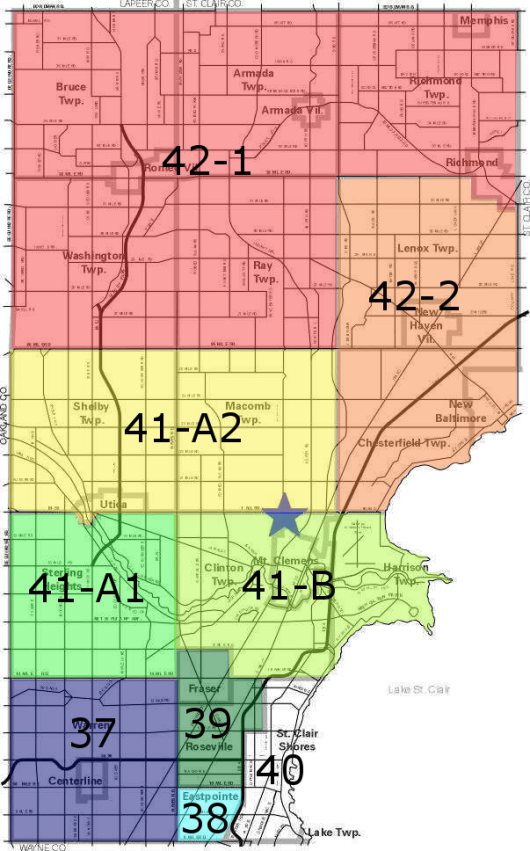
This blog will focus on first offense drunk driving (DUI) cases which our firm handles extensively in all of the district courts in Macomb County, Michigan including the 38th District (Eastpointe), the 39th District (Roseville, Fraser), the 40th District (St. Clair Shores), the 41-A District (Sterling Heights, Shelby Township, Macomb Township, Utica), the 41-B District (Clinton Township, Mt. Clemens, Harrison Township), the 42-1 District (Romeo, Washington Township) and the 42-2 District (New Baltimore and Chesterfield Township).

A life can spin out of control the moment a police officer says, "you are under arrest for drunk driving." For most of our clients that are charged with drunk driving (OWI or DUI), it will be the first time that they have seen the inside of a jail cell. This experience alone will be traumatic and stressful. Upon being released from jail, the person will be given certain documents which include: ticket, temporary license, bond receipt and data-master printout with breath test result (usually a pink form). A person may need to get his or her vehicle out of impound unless there is a hold on the vehicle because of an accident or subject to forfeiture. A person charged with drunk driving should contact an attorney after taking care of immediate needs such as going home, getting some rest and having something to eat.

Our attorneys are involved with drunk driving cases in Macomb County just about every day. This means that we are either attending a court hearing in one or more district courts, talking to someone on the phone or meeting with a new client at our office. We are often able to make predictions about the outcome of drunk driving cases in Macomb County as well as other jurisdictions where we actively practice including Oakland County, Wayne County and the Grosse Pointe Courts.

Here are just a few questions that we ask when we get a new drunk driving phone call:

1. Where was the arrest (Clinton Township, Warren, Sterling Heights, Grosse Pointe, Troy)?
2. Who was the arresting agency (Michigan State Police, Macomb County Sherriff Department, Roseville Police Department)?
3. Why did the police stop the vehicle (speeding, weaving, accident, defective equipment)?
4. What was the data-master or chemical test result?
5. If the person refused the data-master breath test, did the police get a search warrant for blood?
6. Were any other passengers (possible witnesses) in the vehicle?
7. The number of drinks consumed and the time frame that they were consumed (7 drinks in 3 hours)?
8. When did the person stop drinking before operating a vehicle (quit drinking at 2:00 a.m., left the bar at 3:00 a.m., stopped by police at 3:30 a.m)?

There are other concerns, questions and issues which we address in the early stage of a drunk driving case including: whether the vehicle is being seized or forfeited, whether the person has a prior criminal record or drunk driving convictions, whether the person has a substance abuse problem or whether their was an accident involving damage to property or a personal injury.

In part 2, I will discuss the Court process for first offense drunk driving cases .

Part 2: The Court Process: First Offense Drunk Driving Cases In Macomb County, Michigan

September 7, 2011,

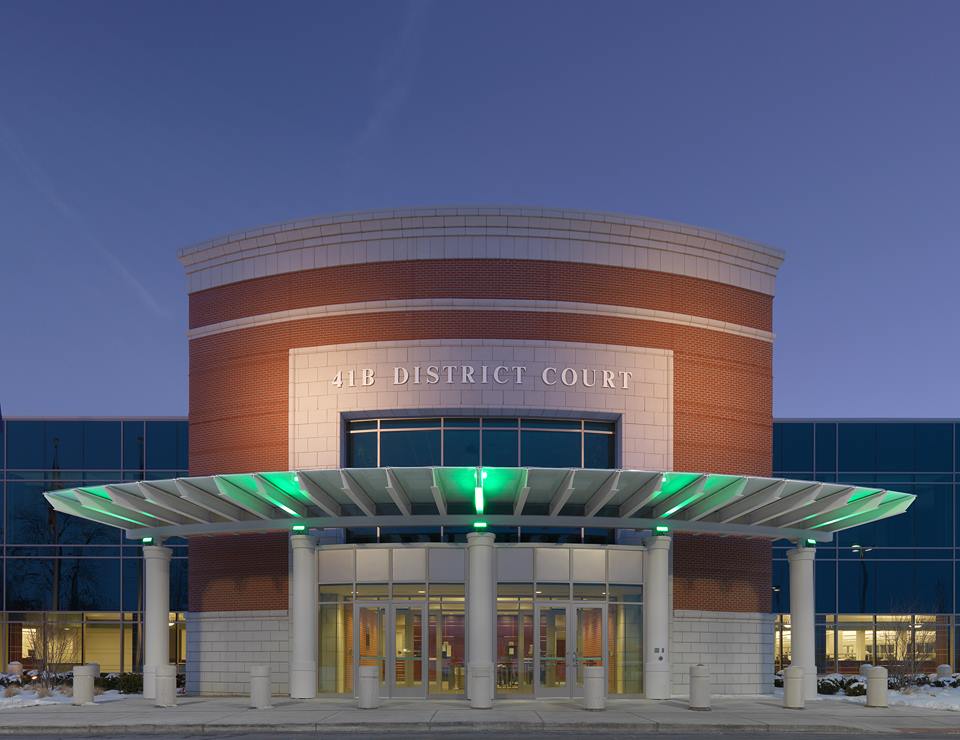
41B%20District%20Court[1].jpg

Most drunk driving (DUI or OWI) cases in Macomb County are resolved without trial. The vast majority of first offense drunk driving (DUI or OWI) cases can be negotiated to the lower offense, such as operating while impaired, unless there are policy reasons which prohibit the prosecuting attorney from plea bargaining.

Our attorneys will be able to review the police reports and discuss various options with our clients such as trial and deviation requests for charge reductions. When a client is charged with a high blood alcohol drunk driving for obtaining a chemical test result of .17% or more (High BAC or Super Drunk), is involved in an accident or has a prior record involving substance abuse, there are legal maneauvers which we will explore to get the case under control.

Court Process and Possible Sentence Conditions for First Offense Drunk Driving (DUI or OWI)

1. Arraignment: You are required to appear unless advised by your attorney that arraignment is waived. At arraignment, the court will advise you of the charges, set your next court date and impose bond conditions which may include random alcohol testing or alcohol monitoring.

2. Pretrial Conference: For misdemeanor charges, a pretrial conference is scheduled and a plea bargain may be negotiated or your case set for trial.

3. Substance Abuse Evaluation: You will be interviewed regarding your substance abuse history and a report will be prepared and provided to the Judge at the time of sentencing.

4. Sentence: The following possible penalties can be imposed by the Court at sentencing:
-Fines and Costs: $800.00 - $1,500.00 (due at the time of sentencing)
-Police/municipal response costs may be due to the city or township
-Maximum Probation Term: Up to 2 years for misdemeanor (reporting or non-reporting)
-Substance abuse counseling, random testing for drugs and alcohol
-Vehicle immobilization, vehicle forfeiture
-Community Service
-Up to 93 days in Jail for OWI or Impaired Driving, Up to 180 days for Super Drunk

In general, the District Courts in Macomb County do not impose jail time for first offenders convicted of a drinking and driving offense. In many cases, our firm has been able to advocate for non-reporting probation. If there is a probation violation, the Court can impose any remaining jail time for a maximum of 93 days for OWI or Impaired or 180 days for Super Drunk. A probation violation can occur if a person receives a new criminal charge, fails to attend counseling or fails a random test.

Mandatory State of Michigan Sanctions for First Offense Drunk Driving

Super Drunk (High BAC .17% or more): License Action: 45 days suspended, 320 days restricted with ignition interlock device, $2,000.00 driver's responsibility fee, 6 points.

Operate While Intoxicated (OWI or DUI): License Action: 30 days suspended, 150 days restricted, $2,000.00 driver's responsibility fee, 6 points.

Impaired Driving (OWVI): License Action: 90 days restricted, $1,000.00 driver's responsibility fee, 4 points.

License Restrictions, Limitations: When one's license is restricted, driving is limited as follows:

-To and from residence and employment, and during employment;
-To and from alcohol or drug education or treatment program;
-To and from regularly scheduled treatment for serious medical condition;
-To and from probation, community service and school.


Other Important Information:

-Driver License revoked minimum of 1 year for 2 drinking and driving offenses within 7 years or 3 offenses within 10 years.
-A person may be charged with a felony for 3 lifetime drinking and driving offenses..
-If you refused the chemical test (implied consent refusal), you must file for a hearing or your license will be suspended for 1 year! You have limited rights to appeal a suspension based upon implied consent refusals.
-If your BAC is .17% or greater, an OWI can be amended to Super Drunk prior to final disposition or plea.

EMBEZZLEMENT OFFENSES IN MICHIGAN

August 30, 2011,


imagesCA94DB7I.jpg

In Michigan, the offense of embezzlement is a crime of opportunity which is committed by someone who is in a position of trust (such as a cashier or teller) or in a special position to care for the property of another (accountant). The recession has caused financial hardship for many of our clients in Oakland County and Macomb County. The housing crisis, stock market decline and bleak employment situation hit many people at a time when they were funding retirement plans and college educations. After 2007, embezzlement crimes soared in the United States. Unfortunately, desperation, poverty, drug use and opportunity are causes why otherwise law abiding people break the law to make ends meet.

Embezzlement: Wikipedia defines embezzlement as the act of dishonestly appropriating or secreting assets by one to whom such assets have been entrusted. The crime of embezzlement is a felony in Michigan which can carry 5 years in prison and a fine in the amount of $10,000.00 or 3 times the value of property embezzled, whichever is greater, if the amount of property embezzled is at least $1,000.00 but less than $20,000.00. If the amount of property embezzled is under $1,000.00, the crime of embezzlement can be prosecuted as a misdemeanor.

Embezzlement is the charge when property or cash is taken during the course of employment. I can say that most of the clients that are charged with embezzlement do not have any criminal history and made bad decisions while under financial stress, depression, or other hardship such as a divorce or death of a loved one. As Macomb County criminal defense lawyers, we attempt to identify the underlying cause or reason for the embezzlement and make recommendations accordingly which may include counseling or substance abuse rehabilitation.

Certain offenders may qualify to have a felony embezzlement charge reduced to a misdemeanor in Macomb County. If the offender is eligible for HYTA (age 17 to 21), we are often able to have the charge dismissed upon compliance after a period of probation. All embezzlement cases will require repayment of the embezzled property or restitution as part of any plea bargaining. Plea bargaining embezzlement cases is sensitive because the victim is usually someone who feels betrayed by someone who was once trusted.